
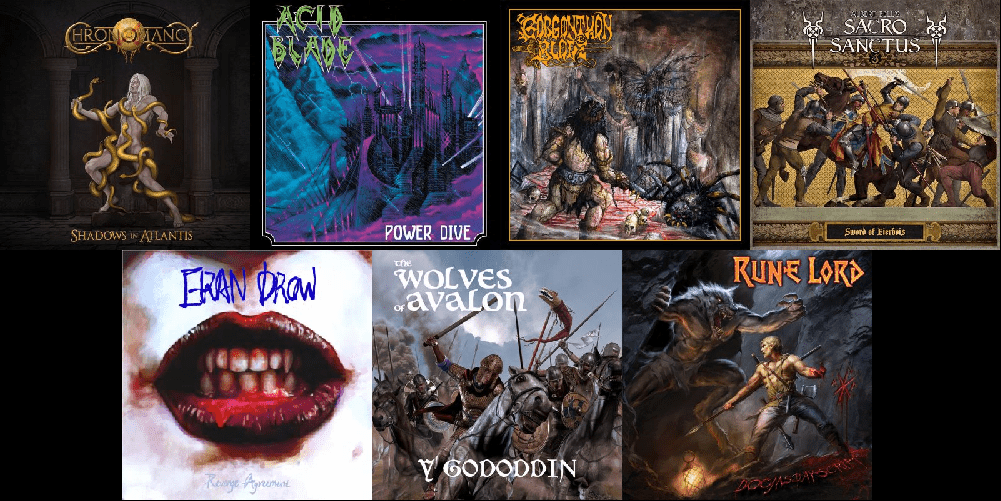
For this year’s Slow Cuts (or last year’s, I suppose) the focus is on “true metal” albums that needed more time to ponder. The majority are heavy metal, a few have power genes, a couple lean into doom, and even a sprinkling of folk touches some parts as well, but these 7 releases all fly the trad flag high. First I present my thoughts on each one individually and then there’s a classic head-to-head battle to conclude. Draw your swords!
Chronomancy – Shadows in Atlantis – Fighter Records – 7.0 (8th March)
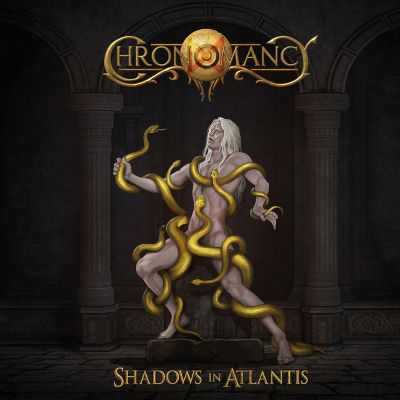
On first listen, I thought this power metal effort from Greece was pretty forgettable. It certainly doesn’t cater that much to first impressions, what with a rather basic album cover and a very even set of songs, all 11 of which hit a narrow pocket either side of 5 minutes. Add to that a tendency to avoid typical power metal showiness in favour of a more earnest epic trad feel, not to mention slightly bunched, echoing production, and we’re looking at a couple of playthroughs that did very little to convince me. However, Shadows in Atlantis – the second full-length from Chronomancy – has some more impressive features lying under the surface. One of those is surely Chris Paschalidis, a vocalist who suits this pompous mixture, matching the backing symphonics on “Magnum Opus” with his own touches of operatic reverberation and is never afraid to belt out mid-range and high-pitched choruses. Some grimmer, semi-growled backing vocals provide a good contrast to his clean tones.
As if you hadn’t guessed already, Shadows in Atlantis falls into that category of “triumphant” albums, ably demonstrated by pompiest of the lot, the late highlight “Legions of Mist”. On this cut the keyboards really show up at the front of the sound in the manner of a less catchy early Battle Beast or more authoritative Freedom Call, while elsewhere we get some balladic Blind Guardian moments, even if the complexity of the Germans is not quite there. Due to pretty active riff work and reasonable sustenance of heaviness throughout the 55 minute listen, I don’t start feeling sour at any particular moment, yet something still turns me off about the Chronomancy experience as a whole. One element must surely be that vague production, since it seems a little woolly given how many instruments go into the songs, but also I’m not a fan of the group vocals that clog up the sonics at times at the expense of any kind of bite. Some power and heavy metal fans will be really into this, but I’m not one of them.
Original TMO review written by Dave Hodges: https://www.themetalobserver.com/3.o/review/chronomany-shadows-in-atlantis/
Acid Blade – Power Dive – Jawbreaker Records – 7.5 (12th August)
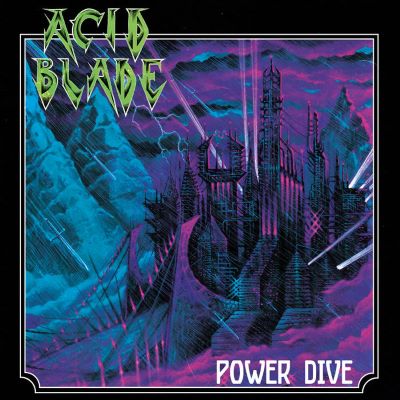
Though actually from Germany, it really wouldn’t have surprised me to learn that Acid Blade had been part of the recent classic metal deluge from North America, particularly Canada. Just everything here seems standard right now: the denim, the leather, the NWOBHM energy, the unabashed vocals, the not-quite-crisp production. Power Dive comes as the debut album and a very traditional affair it is, sometimes to the point where I don’t see how Acid Blade can stand out in the current climate. The 40 minute release doesn’t truly get moving until the title track begins to cook, and at that juncture I start to see past petty criticisms of over-conventional writing and references, partly because the intensity goes up a notch along with the speed so that it’s difficult not to be dragged into the experience. Although probably the finest song, “Power Dive” also begins to bring the dazzle of the lead guitar more into the equation, not to mention a potent bass tone that frequently appears alongside the guitars and sometimes separately.
Not really a common reference, I start to think of Rabid Bitch Of The North when “King Killer” fries some silly high-pitched vocals and exhibits chunky atmospheric chord changes in the riffs. In the end, the similarity between that act and Acid Blade only scratches the surface of the sound, but I feel it summarizes the main appeal of Power Dive. The musicianship will not stagger you in terms of technicality, that’s fine, while the feel of the writing treads a fine line between esoteric and plain ridiculous, especially in regard to the gargling howls and shrieking falsettos from Klay Mensana. And that results in songs that really work when Acid Blade hit with high tempos and infectious riffs, as well as explorative instrumentals, but are not so effective when they slow down and play more basic structures, such as on the balladic “Moonless Night” or the rather inelegant opener “Hot Bloods on the Loose”. Surprisingly, it’s the 2 songs that last longest which capture my imagination the best, “Harpy on the Wing” hovering around 6 minutes along with the title track and delivering a great end of listen pay-off. The album as a whole is slightly inconsistent, though well worth a shot for some not so serious heavy metal kicks.
Gargantuan Blade – Gargantuan Blade – Independent – 8.5 (4th September)
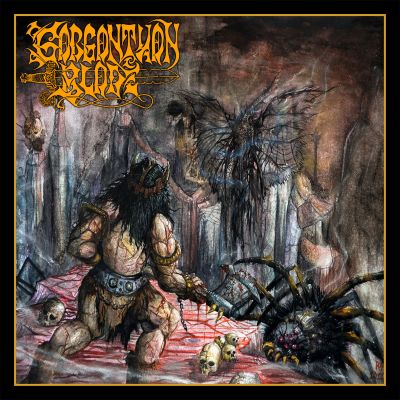
In certain circles, the words The Wandering Midget are enough to send an electric shiver down spines and awaken even the heavily hungover. That’s important to this first Gargantuan Blade album because Samuel Wormius seems to have chosen it as his next stop in reminding people that Reverend Bizarre’s unique style still had more to offer even after the group split up. So consider Gargantuan Blade as The Wandering Midget chapter 3 if you will, although the rest of this new quartet have nothing to do with the old line-up and the 4 songs here have a little more of a lively true metal vibe to them. Expect swords, strongmen, and mixed tempos along with the old perturbed majesty of the RevBiz vocal style. And yes, these guys are from Finland of course. I can’t say that this will win you over immediately, but it’s a very strong dose of what fans will like and remember best.
Since the album is pretty short, every song has to make its mark. Averaging 9 minutes means that everything has plenty of time to develop, though Gargantuan Blade refuse to waste time, getting even the 13 minute “Spectral Pillagers” into shape quickly and dispensing freehanded lead guitar just 3 minutes in. That closing track may be the steadiest overall, giving a chance to show the grandeur of the band at their most serious as gloomy melodies tread over the funeral march of the riffs. The majority of the album favours that epic trudging tone, and although probably not as gloriously monotonous as the source material for Finnish doom the faster breaks seem very welcome, such as the sudden loosing of energy near the end of “Black Lotus”, while “Necromancer’s Blood” seems to flow more easily into its own mid-paced romp and “Dungeon Lord” anyway has its own heavy bluesy roll. What unites all these features together, however, is the enviable focus of Gargantuan Blade to make their music as impactful as possible while also keeping the ingredients simple and essential.
Albert Bell’s Sacro Sanctus – Sword of Fierbois – Metal on Metal Records – 7.0 (30th September)
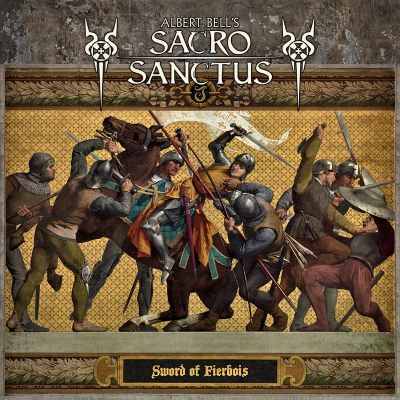
I usually stay away from bands where someone’s name comes before the main group, largely because all of them imprinted on my mind tend to be associated with divas. However, with Albert Bell playing all the instruments except drums in the main line-up (more on that in a sec), it would be hard to deny that Sacro Sanctus belongs mainly to him. The Maltese duo have now chalked up 4 albums, and this new epic tells the story of Joan of Arc, as you might be able to discern from the cover artwork and a track called “The Maiden from Lorraine”. Initially, it was difficult for me to put my finger on a style that encapsulated the rumbling repetitive riffing, gravelly vocals, and mild feelings of grandeur generated on Sword of Firebois, though I suppose you could do worse than calling it “true metal”, like a lot of bands on this page. Influences come from as far apart as Motörhead, Black Sabbath, and Venom, yet the end result should feel most pleasing to Cathedral and DoomSword fans, for whom the pacing, melodic sensibilities, and slightly eccentric vocals will all make sense.
What doesn’t immediately make sense is just why the album needed 11 tracks and 66 minutes to make its point. As I mentioned, the songwriting style is already pretty repetitive, with chunky, rolling riffs each getting a great deal of use, such as when “Clarions of War” just keeps going on a sort of storytelling charge for 8 minutes, in this case very effectively. Strangely, the other longest song, “Blood At Orléans”, is rather a banger too. One possible reason for the album’s scope is the guest list that runs as long as your arm, including 24 separate personages, both well-known and more personally connected to Albert Bell’s other bands. Sometimes we get a view of backing vocalists crowding into a recording booth together, livening up the fairly constant grit from the frontman and indeed giving a more battle-ready feel to otherwise relaxed pace, though it’s perhaps the lead guitar guests who leave their mark the most, even featuring Jeff “Mantas” Dunn (Venom) and Alan Jones (Pagan Altar). All the same, the extra performers never drastically change the feel of any song, meaning that Sword of Fierbois oddly stays at a very similar pace and intensity for over an hour. There’s definitely plenty to be enjoyed here, but more variety and less padding would significantly help the album.
Original TMO review written by Dave Hodges: https://www.themetalobserver.com/3.o/review/albert-bells-sacro-sanctus-the-sword-of-fierbois/
Eran Drow – Revenge Agreement – Independent – 7.5 (10th October)
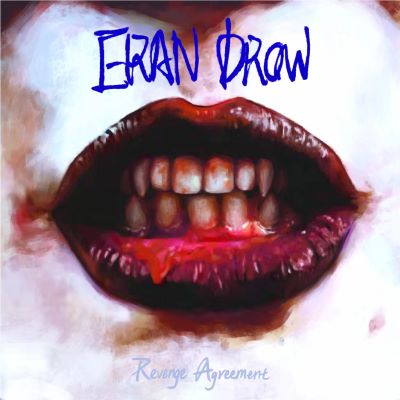
Here’s an album that really took me by surprise in 2022, and it’s for a rather special reason. I first became aware of this guy because he played at a few open mic nights in a bar that I often go to where I live in Hefei, China. Mostly, those open mics feature a few locals jamming covers, but things got a bit more serious when Eran Drow was on the stage. All the same, the Metallica and Marilyn Manson songs didn’t prepare me for the fact that he would release a heavy/power metal album as a solo project, and despite the slight drawback of having a drum machine for a couple of sticky rhythms, it’s a great release. In the first place, Revenge Agreement does a super line in melodic guitar riffing and some pretty extended solos, sometimes heading towards sunny power metal or old-school heavy metal in the style of German groups like Helloween or Running Wild, although a darker, more rhythmic punch comes through on “Plague Inc.”, which features a touch of groove and Black Album strut. Due to the structuring of the album, there’s plenty of instrumental material, since Eran weaves in 3 well-developed intros and interludes around 5 vocal-led songs, giving him the chance to show his shredding and creativity alongside a wide range of singing tricks.
Sometimes the formula works amazingly well, such as with the very catchy “Bloody Mainland” that I found myself singing after only a couple of listens, as well as the tense build-up to the hooky main riff, though “Brain Game” is by contrast an almost plain song that rides one groove a bit too long. Despite hearing a few clean and folky elements from other work that Eran has done, “Rover” arrives unexpectedly near the end of the listen, starting off as a totally mellow ballad with a guest female vocalist and then building into a more adventurous rock section later on that incorporates some classical strings and very emotive singing. Aside from the suddenness of the quiet opening to “Rover”, nothing else feels truly out of place, yet I probably would wish for one more full song in the upbeat trad style to balance the album a bit better, especially considering it’s only around 35 minutes even with around 10 minutes of instrumentals. Occasionally, the vocals jump out a bit too strongly as well, but at least they have plenty of charisma despite a few awkward phrases. Really, this is far better than I had hoped for an album arriving from somewhere so close to me.
The Wolves Of Avalon – Y Gododdin – Godreah Records – 8.0 (25th November)
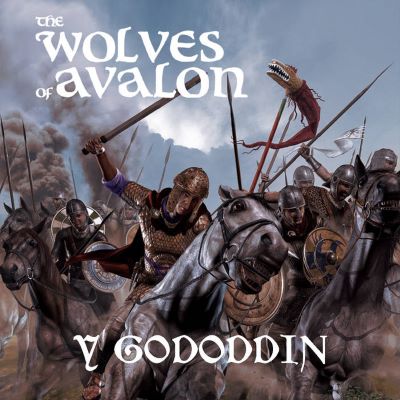
Not quite as crazy as The Meads Of Asphodel but undoubtedly connected due to relatively similar names and the presence of the armoured Metatron, The Wolves Of Avalon have been around over a decade already and returned last year after a long quiet spell for a fourth full-length. Y Gododdin is quite a short one though, its 29 minutes even briefer than the “one long song” approach taken on Across Corpses Grey. Thankfully, the quintet pack in drama, emotion, and riffs to a satisfying degree, keeping things mainly on the melodic side with occasional folk touches added to heavy metal-based pagan tunes. Even if you might mistake it as an intro, I’ll gladly report that the narration on “Through the Murdering Night” hits peak battle-ready sonority, while Tony Dolan’s (Venom Inc.) guest appearance adds the required grit when it finally gets going. A few other vocal cameos – from Hoest (Taake), Thurios (Drudkh), and Wulfstan (Forefather) – bring a sense of drama to even slow-moving cuts like “Dead Men’s Cloaks”, not to mention the textured instrumentation from the other members.
I feel that the songs work best when they take their own course and develop further, meaning specifically “Is This How It’s Meant to Be?” as the longest of the 5 songs. The dynamics allow it to return a few times to soft violin and acoustic guitar, which accompany the most tender Metatron contribution here in a very British-sounding folk manner. A few rattling riffs get thrown down on that song and also the title track, dragging me between badass stomp and “where have all the fields gone?” lament, although moments of true extremity are very few. In fact, what impresses most is the lush balance that the album possesses, meaning that despite its brevity Y Gododdin just about ends up as a fully positive return for The Wolves Of Avalon, along with all the camaraderie, nostalgia, and subtle oddness that entails.
Runelord – Doomsday Script – Stormspell Records – 8.5 (7th December)
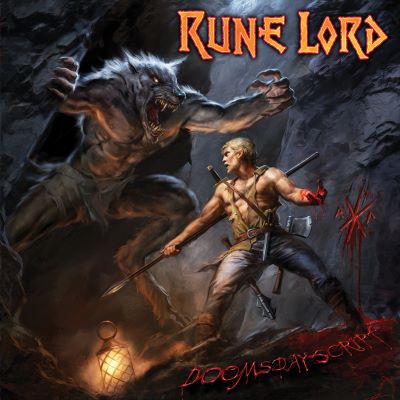
I pride myself on knowing who Cederick Forsberg and Georgy Peichev are, but you can feel free to scorn my ignorance for not knowing that these 2 mavericks still had a project together other than Blazon Stone, namely Runelord. Since 2018 when the first album came out, the Swedish/Bulgarian duo have been doing chest-beating heavy/power metal, which is exactly what I’d want them to do since Forsberg has proven a master of the old-school heavy metal tune and Peichev one of the most recognizable vocalists out there at the moment. Unlike Blazon Stone, a band that tried specifically to capture the vibe of late ‘80s Running Wild, Runelord has a much less exact remit, working on some of the influences from American “true metal” groups of the mid-’80s, yet you could justify grouping this with anyone from Manowar to early Grave Digger. Except you can’t fail to spot Peichev’s “howling bear” style of singing, even if the backing could pass you over as any competent classic metal offering.
I was expecting to be really wowed by the songs on Doomsday Script, but I have to admit that the pair play things kind of safe with the songwriting choices and, good times aside, don’t absolutely nail the performances across the board. I guess one of the reasons is a production that doesn’t leap to life enough, leaving the tempos feeling a little bit flat and the guitars just slightly blunt, although the leads pick things up nicely in basically all the 10 songs, occasionally edging close to Blind Guardian levels of trickiness. Take an example like “Time to Temper”, a fairly typical 5 minute-and-over cut that drags a bit in the verses and relies on the vocals to carry the chorus, then starts hotting up as it moves out of the conventional song structure near the end: it’s extremely serviceable and pretty satisfying, yet seems to lack that spark to take Runelord to higher things. Contrast with the much briefer title track that follows and you’ll see how a touch more speed and a few unusual shifts bring that out of the background more. Great moments are scattered all over Doomsday Script, though I needed the extra time so as not to excitedly overhype it.
Seven-strong slow cuts battle

Shortest album: The Wolves Of Avalon (29 minutes)
Longest album: Albert Bell’s Sacro Sanctus (66 minutes)
Heaviest album: Gargantuan Blade
“Truest” album: Acid Blade
Most creative album: Eran Drow
Most atmospheric album: The Wolves Of Avalon
Most emotional album: Chronomancy
Most intense album: Runelord
Most varied album: Eran Drow
Best vocalist: Georgy Peichev (Runelord)
Best guitarist: Cederick Forsberg (Runelord)
Best drummer: Kyriakos Tsakalidis (Chronomancy)
Best additional instrument: Violin (The Wolves Of Avalon)
Best lyrics: Albert Bell’s Sacro Sanctus
Best cover art: Neša Vuk/Doomsday Graphics (Acid Blade)
Catchiest song: “Power Dive” (Acid Blade)
Moodiest song: “Spectral Pillagers” (Gargantuan Blade)
Fastest song: “Doomsday Script” (Runelord)

Though the competition was pretty fierce, with every one of the 7 bands taking at least 2 categories, it falls to Runelord’s more attention-grabbing style to, um, grab my attention with notable individual performances and some of the flashiest moments on offer. However, it’s worth noting that taking extra time over some of these albums paid dividends in terms of appreciating their content and musicianship, allowing me to explore deeper into a few that I would have initially written off. Beyond that, 2022 was an excellent year for true metal, as this assortment shows, not to mention other albums that I enjoyed and reviewed before the end of December. Here’s hoping for more of the same in 2023!
