
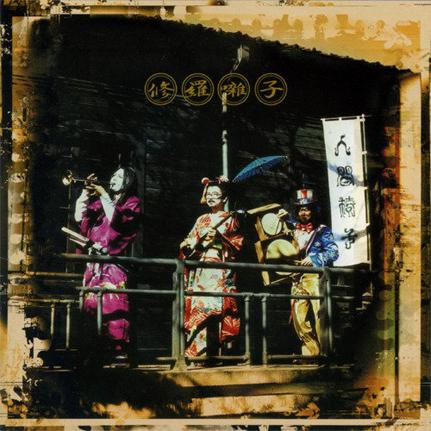
Retro Spotlight: Nigen-Isu – Shurabayashi (2003)
Although the core duo of Ningen-Isu, that being guitarist Shinji Wajima and bassist Kenichi Suzuki, has remained unchanged since the band’s formation in 1987, the band has undergone a few drummer changes over the years. Though the band’s current incantation features my personal favorite Ningen-Isu drummer, Nobu Nakajima (who started in 2004), Masuhiro Goto served at the band’s drummer from 1993 until 2003 (with a break between ’95 and ’96, but I digress). Regardless of who has been behind the drum kit during their tenure, the duo of Shinji and Kenichi has been an unstoppable force for nearly thirty years, with an unblemished discography nearing twenty albums.

Despite 2003’s Shurabayashi serving as Masuhiro Goto’s final album with the band, it’s a fitting departure for someone who had a hand in creating some of the hookiest, most grooving Japanese progressive rock and doom this fine planet has ever known. The album continues the heavy Sabbathian riffing, psychedelic tinged wandering and incredibly tight musicianship that 2001’s Mishiranu Sekai brought in full force. Rather than sticking with a conventional approach (when has Ningen-Isu ever been one for convention), Shurabayashi weaves even more of the psychedelic leads, melodic wandering and full out classic rock styled rocking out into their furiously catchy Japanese doom. That’s not to say the band completely abandoned anything heavy, because there still galloping rhythms and meaty Sabbath-tinged grooves, but it certainly more melodic and nuanced than before.
Looking back, Shurabayashi really seems to pave the way for the follow up, 2004’s San Akudouchuu Hizukurige, which is, quite possibly, the band’s most classic rock tinged album to date. Regardless of what came later, the band found a fine balance between rocking out, ethereal trippyness and hard hitting riffing here. Perhaps one of the band’s most varied releases to date, Shurabayashi moves from the catchy, hard hitting percussion and reverb laden riffing of “Ai No Kotoba Wo Kazouyou” to the flowing, psychedelic noodling and thumping bass walks on “Saigo No Bansan” without missing a beat. Shinji’s classic style of riffing and Kenichi’s nonstop bass walks compliment each other perfectly, giving the band an extremely tight sound. This album doesn’t feature as many dual vocal harmonies as a lot of the band’s other work, but when Shinji’s melodic delivery merges with Kenichi’s deeper approach, it’s quite remarkable.
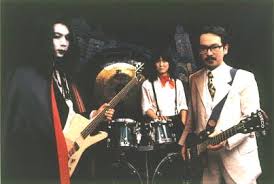
Shurabayashi is quite varied, allowing the album’s hour long run time without dragging. From grooving blues riffs to psychedelic classic rock to Sabbathian doom, Ningen-Isu proves once again why they have been deemed the “Japanese Black Sabbath”. Masuhiro Goto does a stellar job providing a solid backbone for Japan’s tightest musical duo, but the focus with Ningen-Isu will always be on the strangely beautiful chemistry between Shinji’s riffs and Kenichi’s flippant bass lines. I wouldn’t call Shurabayashi the band’s best album in their career, but it does manage to retain the high standard we’ve all come to expect from the band; merging melodic progressive rock, grooving doom and classic rock into an eclectic yet streamlined slab of music that can really only be described as Ningen-Isu.
Note: Ningen-Isu utilizes Japanese characters, text and language. For ease of reading and differentiating tracks, I’ve used transliterations into the Latin alphabet. Not only is it easier for my fellow English speaking readers, it is more universally acceptable to web browsers and page formatting.
