
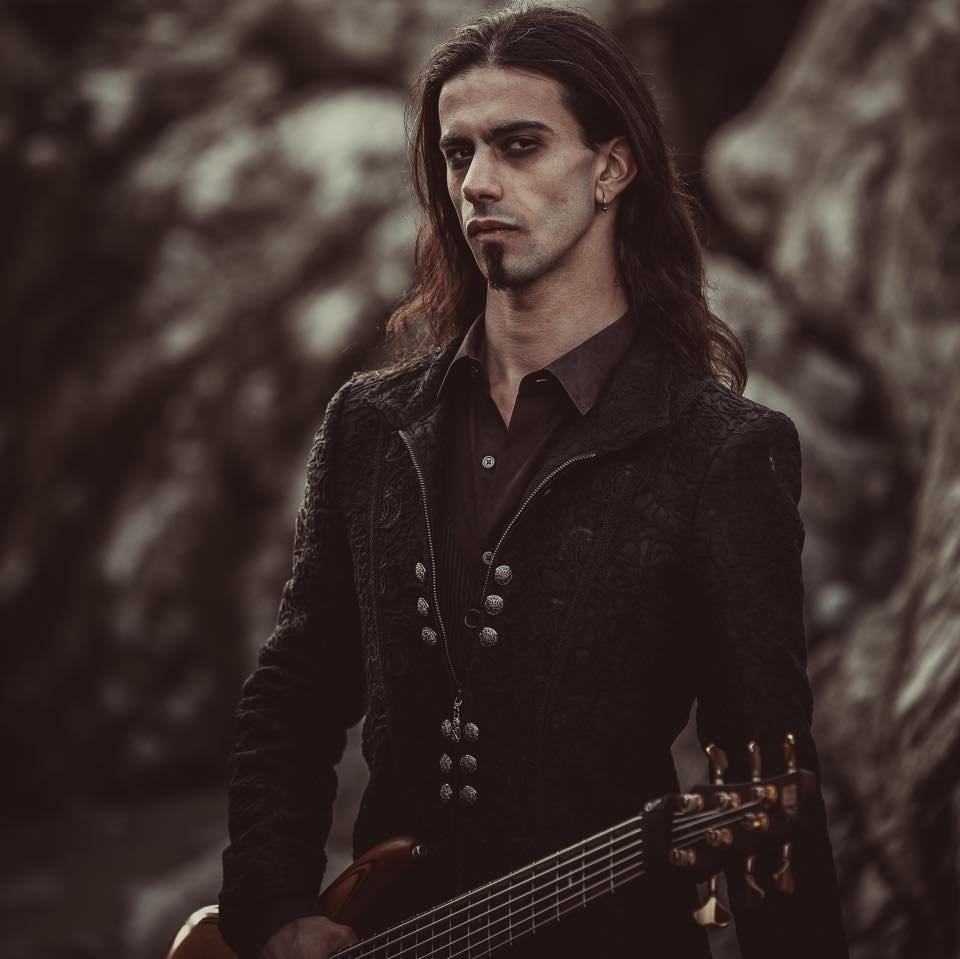
From the classy realms of gypsy jazz to the unpredictable extremity of technical death metal, it seems there are no boundaries to how far one’s musical knowledge can go. Seven Spires bassist Peter Albert de Reyna was kind enough to welcome me into his world for a conversation about everything that it means to be a musical mercenary.
TMO: Hello! How are you doing?
Peter: I’m doing very good. This has been a very interesting year for all of us. What I’ve been trying to do is work on a lot of self-growth. It was a very busy day when the Seven Spires tours got cancelled. But then I got home and realized, this is a once in a lifetime opportunity when everything is cancelled for everyone, so I had about two months when I’d just practice for like 10 hours a day and try to do as much as I could. Then I completely burned out and didn’t want to do anything for about 2 months and now things are starting to pick up again. People are starting to call me for gigs or albums again. Also the past few weeks have been very busy working on upcoming Spires stuff and everything else that’s going on in the life of a musical mercenary.
TMO: Musical mercenary! I like that!
Peter: Yeah I like to use that. I think it’s a good way to describe somebody who tries to be very diverse musically and has a very high standard.
TMO: When did you know you wanted to be a musician and why did you choose to pick up the bass?
Peter: This is an interesting story. Nobody in my family is a musician. When I was very young, like 5-6 years old, I had a guitar teacher and a little acoustic classical guitar and absolutely hated it. So I eventually just dropped that. And then I guess when I was in the 6th or 7th grade, I had some friends who all had Iron Maiden shirts and stuff like that. So we would hang out and one kid would play the drums and one kid would play the guitar. And there was another guitar laying around and they were like “Oh you just play the bass part”. So we looked at some tabs and I played the bass part on the guitar. After that I bought a bass pretty much right away and started learning all the Metallica, Cliff Burton stuff and then I started taking lessons and that was that. Then I went to high-school and I saw kids with this big bass and I’m like: “I bet they’re not playing metal on that but it looks pretty cool”. So then I started to learn that instrument, the upright bass. And my parents were lucky enough to get one for my birthday one year. And then I was locked into it and I started learning jazz, focusing on bow technique and stuff like that. Throughout college my principal instrument was the upright bass and I ended up studying with some great jazz players and learned a lot. That’s how I got to where I am now. But even before I was a musician I was constantly exposed to music, always had headphones on, listening to a wide variety of stuff. I became a very deep listener and developed a relationship with music that didn’t depend on what kind of music it was. So from a very young age I decided I wanted to be able to play anything because of its value when you cross from one thing to another. Then throughout college and even now, I try to express myself without putting a genre on it, but I try to study and never say no to a new experience.
TMO: Did you also study at Berklee like everyone else in Seven Spires?
Peter: Yes. From the first year for me actually learning to play the bass I knew that Berklee existed and it was nearby. So just knew I wanted to go there. The band, we met because of Berklee technically, but we didn’t necessarily meet at Berklee. Jack and Adrienne went there before Chris and I and I probably had like 2 years crossover with Adrienne. So we were all in Boston around the time. But really what Berklee was for us was just a place where we came together and we have a lot of funny jokes from. We’re all lifelong musicians and we’re training ourselves and learning regardless of Berklee. It’s been a useful place but in the end it’s only some walls to be surrounded by.
TMO: So can you give me the story on how you joined the band?
Peter: This was when I was actually auditioning for college. I think it was winter 2014. Maybe in 2013 or 2012 I met Jack because and we played because we had a mutual friend. And I thought this guy’s cool you know. He’s got a flaming guitar and all.
TMO: Is that the guitar in the videos for “The Cabaret of Dreams” and “The Paradox”?
Peter: Yeah, that thing’s badass. So anyway, I met Jack through something completely unrelated to Spires. And then some years later I went to an Arch Enemy show at the Massachusetts metal venue “The Palladium”. And I see Jack on stage and he was playing with Spires. So after they played I asked him if he needed a bass player. Maybe like a month later he asked me if I wanted to audition. I had never played in a metal band before. I was just doing a lot of paying gigs, like bar gigs with a bunch of old dudes. So then I was like “Finally, I get to play some metal dude!”. I went to that audition and it was so exciting. We connected in such a great way just because of the conversation we had. And then we played and it felt even better so from that point on, it just felt right. So that’s how I joined Spires.
TMO: You mentioned that your studies were mainly on the upright bass. So what did that actually consist of?
Peter: So from high-school I was learning the upright bass and I already knew I wanted to master it. I would like to have my voice as this instrument as well as the electric bass. So I looked at Berklee as an opportunity to really push my skills and develop 100% so that I could leave it having a very fundamental understanding of this instrument and then continue learning for the rest of my life. I was a professional music major so what that means is you can pick what classes you take. The only things I wanted to focus on were the music business aspects and then the upright bass aspects. During my first year we were in Spires and wanted to get on a record label and release an album so I said, I’d better learn what’s going on and see what I can do to help and some people in my family had a business background. And then the rest of the stuff was mostly anything jazz related or certain elements of world music, latin music, classical music. I studied with classical teachers because I really wanted to be able to take improvised solos with a bow. I did that so I could have a really solid bow technique and be able to rip at that stuff. Plus, it’s the only time on a string instrument where you can have a breath-like quality. And that really struck me because I’ve loved a lot of violinists, old soprano sax players like Sidney Bechet, that kind of thing. So this very expressive dark old school stuff like gypsy jazz with a lot of dark harmonies and loud crazy vibrato. I’ve always wanted to be able to do that and I don’t know if I ever will but the bow gets you close. So those were my focuses at Berklee.
TMO: Since you’re very much into jazz, gypsy jazz. What artists would you say are your biggest inspirations in this area?
Peter: A lot of different stuff. There are lots of gypsy jazz musicians that I’m really passionate about right now. I really like Jason Anick, he’s from Boston. I like … . There are so many gypsy jazz musicians besides Django Reinhardt. Most people think that this genre stopped when he stopped but instead, it continued to grow and developed into something that’s completely different than what you hear Django doing. So really, as far as gypsy jazz goes, I would say anything is an influence to me. The whole genre is something I will listen to. If I don’t like it, I’ll recognize that I don’t like it and it’s still an influence cos I’ll know what not to do.
TMO: That’s always a useful skill, to know what not to do.
Peter: Yeah exactly! And then as far as other jazz goes, I listen to a lot of stuff where I didn’t do a lot of research as to what it was or who was playing on it but I’d just listen. I never liked to inform myself that much because then I feel like it would begin to influence my opinion on it. But I love Keith Jarett, George Duke, George Benson, Christian McBride. I love all sorts of jazz. And especially when it comes to more modern gypsy jazz, I feel like it’s a huge part of my voice as a stand-alone musician because of the high standard of playing but also because of the fact that you can hear mistakes in some of these recordings that you wouldn’t want to delete. Because they’re unexpected but they’re not bad so it’s a surprise and it ends up being more beautiful on the long run. But with all this talk about jazz, my approach to playing metal is not as a jazz musician and I know exactly where that sits in the bigger picture. It’s a separate thing that I have control over when I choose to incorporate jazz into my work in other areas.
TMO: So about that, how much does your knowledge of jazz actually make its way into Seven Spires material?
Peter: Studying different types of music just gives you more options and the point of being aware of a wide variety of things is so that you can shut your brain completely off and when you’re presented with new music that you have to write a bass part for you don’t think about anything except what you want to hear. And I personally feel like I have more options because of the things that I have heard, so what I want to hear now is easier to reach because of all those things that I’ve heard and played. The point is to not think about it and just see what sounds best. With Spires songs I really enjoy taking the bass part and doing the maximum that I possibly can and I don’t send that to anybody. I’ll sit with it for maybe a month and then I’ll take all these different things out, see what I can do with it, maybe play it with Chris. That’s sort of the approach: just shut your brain off and give yourself time.
TMO: Does your knowledge of the upright bass influence your playing on the electric bass or the other way around?
Peter: Yes, definitely! From a strictly technical aspect, the upright bass is huge, it requires a completely different technique. In terms of my left hand, it makes it much stronger and it makes my playing much more economical because even when you’re playing economical, it’s still really big and there’s a lot of motion. So that transfers over to the electric bass. And when you’re playing anything with a bow, your left hand is doing all the work of the notes. So you can develop a monster left hand. So that’s one thing. The other thing is how the upright bass lends itself to phrasing on the electric bass. So when I try to play more melodic on the electric bass I’m thinking as if I’d run out of bow at some point so I’d need to take some space or phrase differently. Also playing the upright bass has thought me when to take space, when to play and when not to play. So there’s a lot of crossover. On the Spires albums, for the most part, I do both electric bass and upright bass because Adrienne wants to have as many live strings as possible which is really hard. So if there’s a song that calls for a really heavy string bass section in the orchestra parts, maybe I’ll play over it and blend with the midi strings.
TMO: Last jazz-related question. Spires recently did a dark jazz version of The Paradox. Was that your idea?
Peter: No. Actually, Adrienne is a really big jazz fan as well. We have different tastes sometimes. But that was one that she brought up and I was really excited about it. So that was a lot of fun and then we also did the acoustic version of Silvery Moon. We really like doing these acoustic things and jazz stuff because we don’t think of it as jazz. We think of it as Spires with different clothes on.
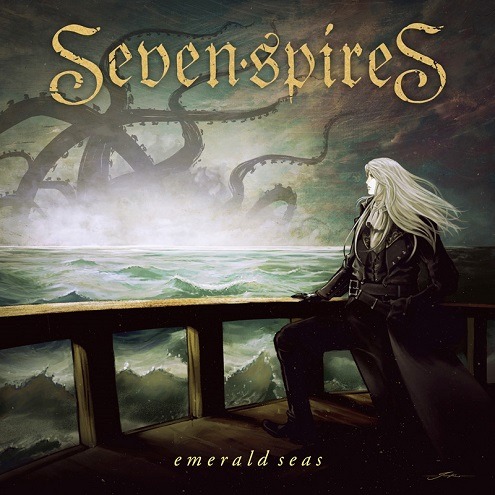
TMO: Ok, now let’s get properly into Seven Spires. Your latest album, “Emerald Seas” was released in February. What was it like on your end writing and recording this album?
Peter: It was a really emotional experience. The first thing is that it was the first time we recorded Chris. To have him on the album was really amazing for obvious reasons. It changed a lot of things. The other thing is that we received a lot of love and support when we released Solveig and it was a huge victory for us at the time but we’ve grown so much musically since then and when we all came together on this music, we noticed that this really is a statement that we have to make. This is a chance to open up our hearts in a much more honest and developed way only because our skills have allowed us this time around. So I think we all took this opportunity to really get in touch with our feelings for this album. And of course, the songs took on a different light because it’s the second part of the trilogy. And in the songs that we’re working on now they’re again taking on a different light again. We’ve got the overall Seven Spires sound but every album has its own vibe and “Emerald Seas” is special because it’s the album that whispers to you. And that I think is a really special quality.
Listen to the album on Spotify
TMO: So do you feel like working on Emerald Seas has pushed you to improve as a musician, as creator and as a player?
Peter: Yes, all three of these. What typically happens is that all of us are involved in so many other things in addition to Spires and we don’t see each-other as often as bands who live in the same area so whenever we get together it’s like meeting three new people because everyone has improved so much. And when we go to write a Spires album it’s the chance for us to use everything we’ve learned from all these other projects. When it comes to Spires we take EVERYTHING that we can possibly bring in that moment. And it’s not just notes. It’s a feeling. And then the other thing is, with each album, the parts that Chris and I write really start to influence the parts that Jack and Adrienne write so they started wanting to hear our ideas from a much earlier stage now because when we put our parts to it we give them ideas. We really have this back-and-forth dynamic. And we’re all starting to experiment as song-writers on our own. Jack and Adrienne have always done nearly 100% of the writing but Chris obviously has begun releasing his own material and I’ve started to expand as a writer as well. Nobody will be hearing my stuff for a long time but I’ve also started collaborating with people. So we’re all becoming more songwriters and what that means for Spires is that we’re all thinking like song-writers even if we don’t contribute to the actual writing of these songs in a typical way.
TMO: I know you have a pretty strong technical death metal background as well so what are your favourite bands or artists in that area?
Peter: Well definitely Obscura. The album “Omnivium” I heard very early on. I was only aware of like Iron Maiden, Megadeth, those big bands that get most people into metal and then for some reason I found this album and I had never even heard death metal vocals before so I was completely blown away. I kid you not, I listened to that album for every day for about two years front to back. For me it’s like the perfect album. But I love all the Obscura stuff in general. And then there are bands like First Fragment, Necrophagist. Forest Lapointe, he’s a fretless six-string bass player. He played on a lot of tech-death records. He’s had such a huge influence on things in general. But basically, any sort of tech-death is really cool because for example Archspire is so different from Obscura or Beyond Creation so I really like tech-death because it’s such a wide genre. Like some people will write a piece for a string quartet in the middle of the album and others will just blast at the highest bpm possible for like 3 songs straight. It can be anything. That’s what Chris and I really like about this genre and it has taught us so much about who we want to be as players. For the short period that we were in Unflesh, it really pushed us to improve our technique at fast tempos and do a lot of things we love that we weren’t actually able to play before.
TMO: The reason I ask you about this genre is because I really hear your tech-death influence in Seven Spires even though it’s definitely not tech-death. So do you make it a point out of blending those things together?
Peter: Not intentionally. As I said before, it’s like using any influence when you shut your brain off and think about what you want to hear and what feels good to play here. For example, if I’m looking to expand on the harmony of the song, I’ll stretch a given chord with some notes that sound good so to a listener that’s not very familiar with this sort of thing, it will be a surprise. I hear that in tech-death a lot. The harmony is sitting on the bottom and then you hear a line that sort of stretches it. The chord is there and then whatever happens in a certain line, it’s an opportunity to draw the listener in and be part of the chord without being the chord. So I think that’s where tech-death comes in a lot, it’s using unique harmony and unique melodic approaches.
Listen to the album on Spotify
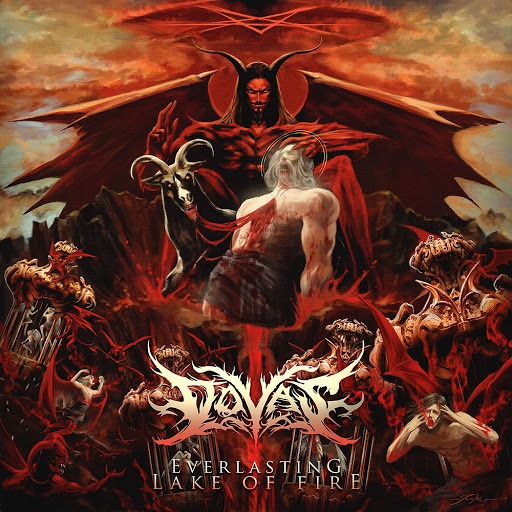
TMO: By comparison, the Dovas album is a lot more technical death metal. So what was it like composing and recording for that one compared to Spires?
Peter: I think the way that I would describe the genre of that album is definitely classical death metal and thrash. I think tech-death is something that Chris especially shoots for in his writing but this is his first album so he’s writing the stuff that he really feels. For me that experience was really cool because he had only been playing guitar for one or two years and I had never heard him sing before besides this one Slayer cover show that him and I did. So it was really interesting for me when he was just like “Oh here’s the album I wrote” and I just didn’t see that coming. Everybody’s first album is just getting started so what I tried to do was get the ideas he wanted and really pump them up, increase them in how they would be conveyed. We’re working on his second album now as well and it’s been really cool to see the development of it because this one I think does have more of a tech-death thing going on. And he’s also asked me to help write some parts in the beginning this time.
TMO: I think I also heard something about you planning to do backing vocals for Seven Spires?
Peter: Well I’ve always really enjoyed singing but I never really practiced or trained that aspect of my musical self. So I wanted to try that and Spires is a great place to start. We had some great tours planned for this year and I thought it would make the shows a lot better if we also had someone else singing. I started working on the parts about a year before the planned tour. Because I did not write these bass parts with the intention of also singing. It’s probably been the biggest musical challenge with Spires for me at least in terms of performing. But I want to continue to do it and get that skill up because it would be fun at shows to do some backing vocals stuff.
TMO: What would you say are the most memorable or spectacular bass parts on “Emerald Seas”?
Peter: The first one is probably the tapping bit on the verses in “Every Crest”. That song is fun in general because during the choruses I do a lot of galloping stuff. “Bury You” is also one where in the verses I’m playing the harmony. I think a lot of people assume it’s the guitar. That was a point in a Spires song where I found an opportunity to play chords. I love playing chords. That’s why I do a lot of tapping stuff because it’s a chance for me to play chords without actually playing chords because normally they don’t sound good on the bass if you play them as you would on the guitar. Another bass moment that I think is really cool would be Silvery Moon. When recording that, I basically took everything that I was feeling and with every note, really played that in a way that will forever be cemented in those notes in that time. I think that song is the same for all of us, it’s where our souls are whispering to the people listening and you won’t really know that unless you also feel it. You have to be in a certain place to really get it. And there’s one more moment I should mention. In “Drowner of Worlds” in the blast beat section. You may not have noticed it because of the mix but it plays really high. It’s like my secret. I don’t think many people heard it at all. And then live, for that part in particular I turn the volume way the fvck up so it really hits them and they’re like “Was that on the album?” and they go back to listen to it and still can’t find it.
TMO: You mentioned you also studied the business side of music. So before signing to Frontiers were you in charge for managing Spires?
Peter: Not necessarily. Before Frontiers we had a manager for maybe 2 or 3 years and he’s our manager now. He’s a really great friend of ours and he became our manager when we were trying to release Solveig so I took it upon myself to learn as much stuff as possible so he and I could work together and I can communicate the ideas with the band. He’s awesome, always helping us out. But what I typically tend to do is manage a lot of the financial things so anytime we’ve got to plan for an album, and music videos, lyric videos and all this different stuff, I take care of that. Over the years we’ve all developed a good business knowledge. But basically, with my business focus at school, the point was for us to have a manager but for me to also know what’s going on all the time. Another thing is that if a band member were to become a manager it gets hard because the manager is supposed to be someone who is not necessarily in the family.
TMO: So based on this knowledge, what would you say is one of the most important things a band could do to get noticed?
Peter: Well it’s a really hard question because it changes all the time. With a lot of the recording session work I do I see a lot of different projects and great music and a lot of passion put into this and everybody’s music deserves to be heard if they’re making it honestly. I think the advice to other bands is to live it every day. If you’re gonna be in a band and want to release an album, I think it’s essential that every morning you wake up and you’re like “Rock’n’Roll baby, let’s go!”. And that day you’re gonna do something to either make you a better musician, to get your band more known, to connect with fans, to develop story ideas, whatever. Every day you should pick one thing that you can check off. And things will happen. But I think a lot of the time when people ask me this question, they think that there’s some secret trapdoor. There’s one thing I learned from jazz musicians and this is from a book about Bill Evans, a great jazz pianist. He said that “If you take care of the music, the music will take care of you”. So there are no shortcuts.
TMO: So as far as I know you’re a full-time musician and you mentioned you’re doing all this session work. So is there any particular project that you’ve been a part of that you’d want to share?
Peter: I don’t think I can share a lot. A lot of this stuff I don’t know too much and I don’t know how much I’m allowed to say or whatever. But there’s a lot of cool music on a lot of different levels so I’d encourage everyone to support local bands in their scene and continue to go out so looking at the city-wide scene, the country-wide scene and so on because there’s so many people that are writing awesome stuff. It’s great to see that metal is alive and a lot of people have been writing albums and that sort of thing. I worked on a lot of different settings like playing bass for a musical or being a music director for choirs or stuff like that
TMO: You recently joined this band called Aversed. What can you tell me about how you joined them and is there anything exciting happening there that you might be able to share?
Peter: I joined this band maybe this past fall and this is a band that Spires grew up with. We had done a lot of shows together when we were doing local shows. They always kicked ass and we were always blown away by their performance. So when they lost their bass player like a year or two ago, they got in touch with me. But I haven’t recorded any material and haven’t done much with them yet because of the Coronavirus but their music is really cool. Generally, I try to be careful with joining other bands and stuff like that because it’s easy to do too much in somebody else’s eye and dilute what really matters. There’s not too much happening with Aversed right now but I wanted to help them and we’ll see what the future holds.
TMO: Last and most important question: Is Dovas your best bro?
Peter: Yeah man! He’s the ultimate homie! I love him! When he first joined the band and we all played together for the first time, I’m pretty sure once he started playing, I was sold. It was really great to meet him in a musical setting and then share all these crazy moments. We’ve just collected so many experiences over the years!
TMO: Well that’s it. Thank you very much for taking the time to talk about Spires and your musical background and all!
Peter: My pleasure. I appreciate you listening to what I have to say. It’s always a pleasure to answer questions and to talk with people because most of the time when people interview us, they’re awesome.
