
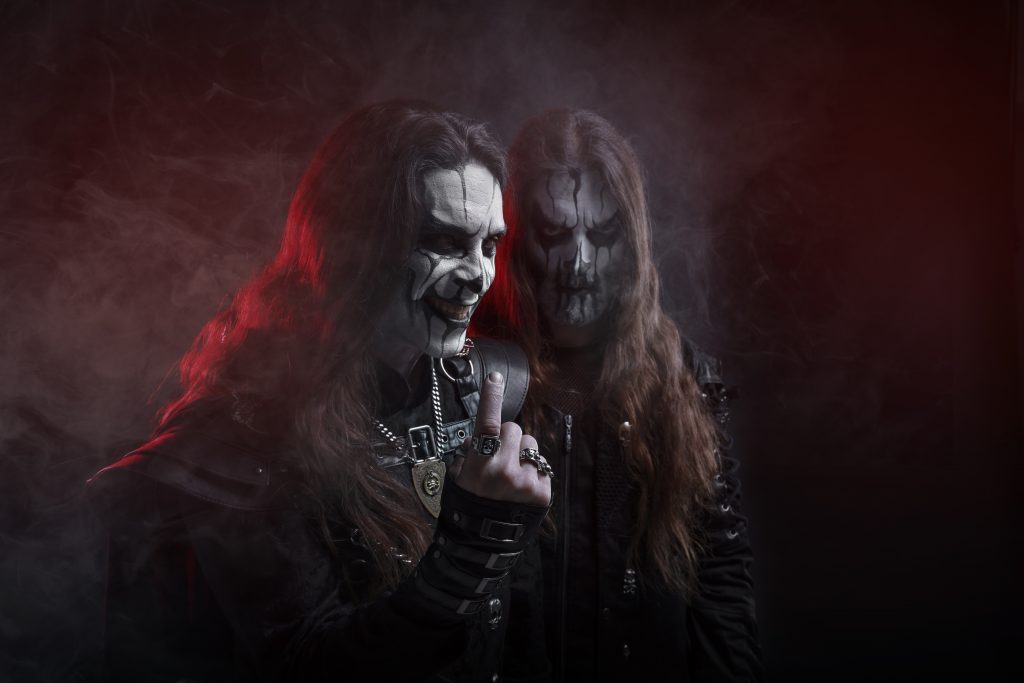
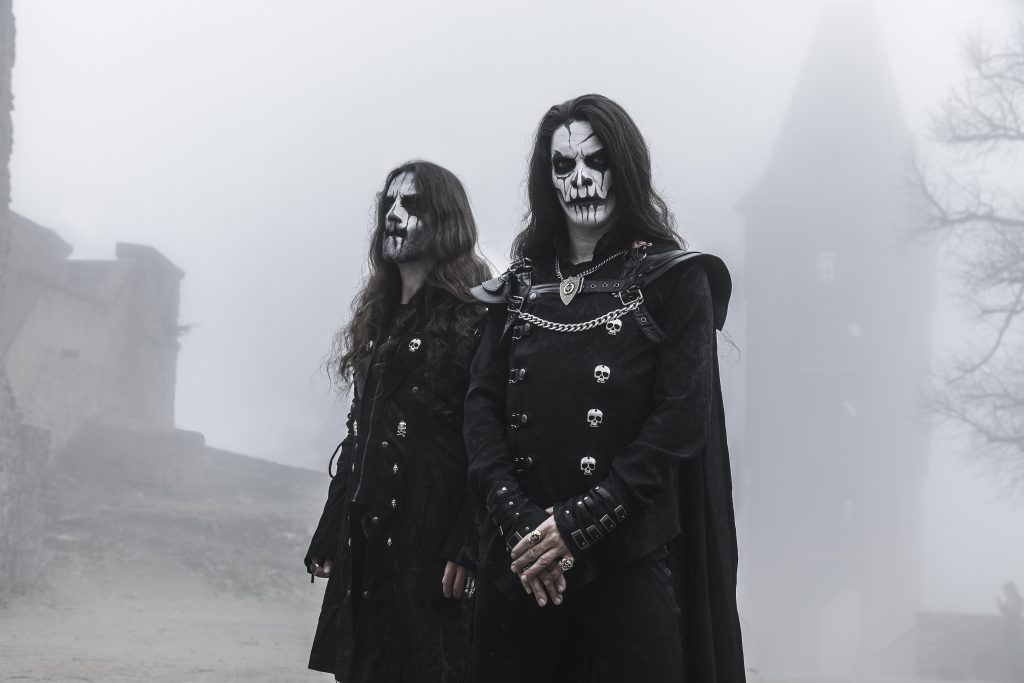
Recently we had the utmost pleasure of talking to the one and only Clemens “Ardek” Wijers, keyboard wizard for the notorious Dutch horror metal outfit Carach Angren. We discussed their new album “Franckensteina Strataemonstanus”, the band’s live performances and even got him to nerd-out about orchestrations. Read on to get the latest hot news from the maestro himself!
The Metal Observer: First things first, how are you coping with the entire situation, how are you doing?
Ardek: Well me personally I’m ok, I jokingly said to some people that for me not much changed it’s just that everyone else is in lockdown too. I usually spend my days here in my little home studio. But to the people that are affected directly it’s horrible and it’s kind of a crazy situation. Nobody knows how to deal with it and I think we are lucky that here in Holland things are pretty ok. But of course the whole music industry is in the waiting room and for us as a band, we were promoting the new album and we didn’t have any tours planned right now but we would’ve liked to go out in the fall and that’s all uncertain right now.
TMO: I’m a bit of a cave dweller myself so I wasn’t that affected either. So about that, can you tell if the fact that you don’t have any tours announced is affecting the way the new album is being received?
A: Well the strange thing is that we had some meetings about it with everyone involved and we had to postpone it for a month. But there were also many other bands who were delaying albums even for a year or longer. And we felt like that’s too much because we are excited about it now and have been promoting it and it would be a bummer to put it in the fridge and then next year say “Hey here’s that album that we had ready a year ago!”. And also this is affecting everyone, it’s not just that our band has a little problem. So that also made it easier for us. Of course, it sucks a little bit that you can’t do the things that you normally would and some bands immediately went live streaming and we didn’t feel the need to do that. We made 3 lyric videos and we hopefully can restart the video production process. We want to make a videoclip.
TMO: Yeah we’re all in the same boat, I can tell. But now let’s get into the new record! I’ve had it for a week now and listened to it daily, and one thing that became obvious from the beginning is that the way the album and story is structured is more similar to your first releases, starting with an isolated event and then continuing with the main story. So did you aim to do something that would be more similar to your earlier work?
A: Well that’s cool, you’re the first to notice that, I’ve been explaining it so far. We try to always start like a movie where you have an opening scene in modern time or a different time and then you go back and develop it. We like that because it’s a bit of a shocker. So we do that consciously and it’s always super difficult and in the end it maybe feels like we just wrote it all once, but this actually took like 2-3 years. Sometimes the concept comes together during the recording or we even change things in the narrative. What I didn’t want with this story is to just have a linear flow. Johann Conrad Dippel has an interesting life and you could make a linear narrative, but that felt kind of predictable and there were so many things that happened even after his death that you could connect to it. So it felt more exciting to explore and make also some things that are not true. So it’s a combination of history and fiction.
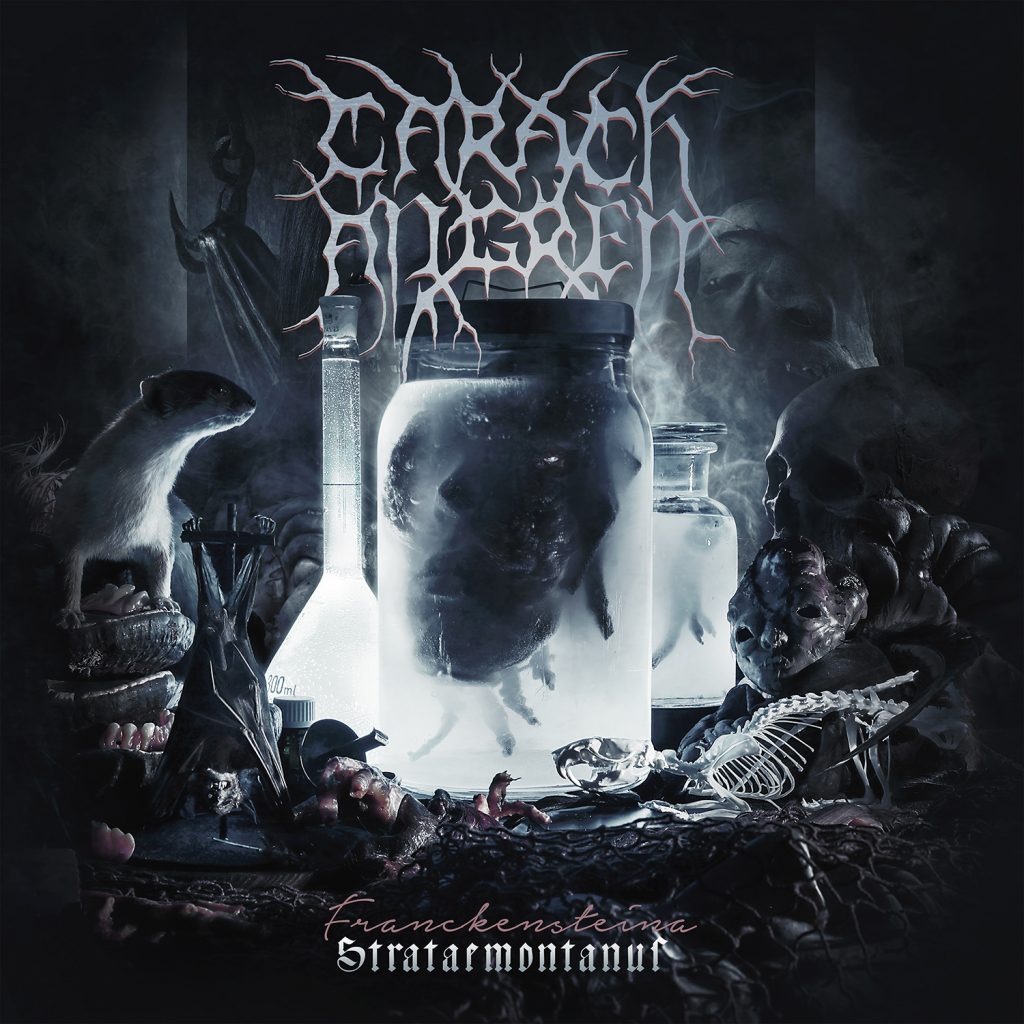
TMO: I also felt that way and it’s really cool because it also allowed the singles “Der Vampir von Nurnberg” and “Operation Compass” to be stories that aren’t ripped out of context and make sense on their own. Was this the reason why you chose these songs as singles? Because I felt like they weren’t the most striking on the record.
A: There wasn’t really a reason. We started with “Monster” because it was completely different. We usually make very complicated fast songs and this was something more simple but therefore not easier and we were excited about it because it has this really huge bombastic bass and the intimate vocals of Seregor. But from the fan perspective it’s something you don’t expect at all so you break some windows when you throw it out there. And then “Der Vampir von Nurnberg” felt like a typical Carach Angren song and then the last one “Operation Compass” is more spontaneous.
TMO: I think it’s cool that you went with that because then you have no insight in how the many story develops so it’s more striking. I’m going to go on now and it’s actually funny that you mentioned “Monster”. With songs like “Monster”, “The Necromancer” and the title track there’s a very strong focus on the marching rhythm part that I felt almost has a bit of an industrial vibe. Did you give any special attention to the rhythm aspect of the record this time around?
A: For those songs definitely. I was experimenting myself at the time with industrial stuff and after many years I tried to play guitar which I couldn’t do so far just with any of the other guys’ guitars because I’m left-handed. So I always compose from the piano, even the guitar riffs. This time I bought a cheap guitar and started making some simple riffs and what is cool is that I don’t have the ego attached to the guitar that I have to my piano so I was already happy with super simple stuff. But that gave me a new approach and I felt like it fits this album because it’s about experimenting and I was at the time experimenting with new sounds. And Seregor liked it too so we made a couple of more industrial and less complex songs to have some heartbeat. I think you should renew with every record and that’s a challenge because you lose a few people but also gather some new ones.
TMO: I can definitely see that. Basically every record you’ve done takes a hard left turn from the one before but what I think is interesting with this one is that it seems to go both ways. It throws back to the early ones but also adds all these things that are completely new.
A: That makes sense, with some songs I get that. Like with “Sewn for Solitude” I had a really Lammendam vibe. First I wrote some different lyrics for it and I even incorporated a horse in the lyrics but in the end it didn’t make it. But for me that’s a sort of connection to that album’s cover and it’s also in the same time era.
TMO: So now that we brought up the industrial stuff, has your work on “Parasite Twin” influenced how this record turned out?
A: Yeah definitely. The funny thing is I was working on all that at the same time and “Parasite Twin” was my personal experiment. It was just something fun and something different, but at the same time I wrote the title track and I actually thought to include it on “Parasite Twin” but it was kind of cool so I sent it to Seregor. And he said that’s too industrial but then two days later he tried to sing on it and got excited and called me. So he came over and we rearranged some things that he came up with and he sang on the chorus and then we were both super excited cos this was something new. That’s how it ended up on the album so you’re right.
TMO: It actually makes sense that you said that because on these parts the vocals also amplify that marching feel a lot and really fit in with the rhythm.
A: Yes, and he came up with that idea in that says Franckensteina Strataemontanus and I was thinking “How the hell is he going to sing a word like that”, but he did it and it was perfect and then I thought this could be the album title. Sometimes these things just come together and it’s really satisfying.
TMO: So now that you mentioned working on that and “Parasite Twin” at the same time, I know that was a more experimental project while with Carach Angren you’re usually working towards a specific goal. So then was creating this new record also more experimental for the first time with the band?
A: Yes, also because we didn’t actually have a clue what it would be about. We also toured a lot and needed some extra time. We would have gone for a record last year but that was too soon because you get stuck in this Carach Angren role and that’s why I also wanted these solo projects to get a fresh perspective. But coming back, this writing process was also very liberating and the story dictated experiment because you cannot talk about Frankenstein and not experiment yourself. So Seregor was also really enthusiastic about it when I touched down on Dippel. I first had a dream where I thought I encountered something like Dippel and that was a personal connection to the whole Frankenstein world for me because I knew we couldn’t do just Frankenstein without some twist to it.
TMO: Yes, I also felt like apart from the side stories in the singles it’s a bit of a hybrid between the story from the book and the myths surrounding the real person “Johann Conrad Dippel”.
A: Yes there are elements of both but there’s more, like Seregor added some different animals, like in the first song where it’s basically also a bit related to “Pet Sematary” by Stephen King. So it’s like a cocktail of a lot of elements that we like. And I also like when the end connects to the opening.
TMO: Yes I actually didn’t notice how it ended the first times that I listened to the record but yesterday I did and it fit right in. Up until then I always felt like there was a missing piece somewhere.
A: That’s always the thing, we don’t know if it’s gonna work and are people finding it? On the last record it was more difficult to find these connections which is why this time I consciously put some things from the opening in the ending, so that you start looking.
TMO: So you’re playing a thin line there to keep the mystery to it but not make it too difficult to find these things.
A: Yes and some people don’t look into the lyrics that much but I still like that you can feel connected to the individual songs and the album because the music should portray the images. Sometimes with concept albums you have to really study them before you connect with it and I think that’s too much. You need to connect with it through the music and then for the people who like to go into it then doors are already opened. Sometimes people even find things that I don’t know are there.
TMO: The next thing I want to ask is about the violin parts that you have on “Sewn for Solitude” and the closing track and I actually found that you’ve had this sort of parts on all records since “Lammendam” and it’s always the same guy, Nikos Mavridis. So that made me curious, when did you meet and how did you know he was the man for the job?
A: It’s kinda funny! We were signed by a one guy record label from Germany, Philip Breuer at Maddening Media. He had a friend Patrick Damiani who had a studio and we were there for 3 weeks recording “Lammendam”. And I had made the orchestral stuff and at some point I think when we were doing “Invisible Physic Entity” Patrick said “It would be so cool to have a violin player. I know a guy, he lives here he’s from Greece.”. We almost had no money so we gave him like almost nothing. But he brought him in and it worked and it sounded amazing so ever since we’ve been working together. Same for Patrick, he appears in some way in every album since the beginning. That is cool about Carach Angren, you have the band but there are so many people around it contributing, friends, volunteers, professionals. It’s much more than just me or Dennis. And Nikos is an amazing violinist, he plays in orchestras but he’s one of those rare guys who can also play from the heart without notes.
TMO: I actually noticed on “Lammendam” that it’s really scary and dark all the way through but then these violin things were a contrast to that. So is that what lead to bringing more tragedy and theatrics into what developed later on?
A: I think “Lammendam” was very dark because it was a ghost story but then we did “Death Came Through a Phantom Ship” which is more maritime and has an adventurous tone and there he played a lot because even on the big string arrangements he played like 5-6 layers of violin. So on “Bloodstains on the Captain’s Log” and “Van der Decken’s Triumph” you constantly Nikos playing. But the story always dictates what happens so then on “This is No Fairytale” which is a lot more aggressive because it’s about domestic violence, his playing is more in the background and the album was more about this Stravinsky style orchestra. So with this new story for example in “Sewn for Solitude” you need the loneliness of this beast trying to connect so then you bring Nikos and his violin, it’s a no brainer.
TMO: I was actually going to ask how you decided on which songs you would have the violin but it makes sense here because it has this contrast from the psychotic tone of the album and really empathizes with the horrid state of being that the character is in. And I actually felt like until that point the scientist is all psychotic and delusional and when the monster comes to life it actually appears more human than its creator.
A: Yes. I wanted that because I read Mary Shelley’s novel and I was blown away. I only knew Frankenstein from all the later superficial stuff. So it was blowing my mind that the monster was kind of developing this emotional intelligence. But Victor was suffering too. He couldn’t escape his laboratory and his need to invent and at the same time he was disgusted with himself working with body parts. He would manipulate nature but then he would go on long walks in nature to shelter from his mind. So he was using and abusing nature. And I was reading this when I was writing these melodies.
TMO: So another new thing that I was surprised to see was the narrated parts and clean vocals. How did that come about?
A: We had that a bit on previous albums like “Death Came Through a Phantom Ship” but some friends were always making fun because I don’t have a very good accent and it was actually me going “This is tugboat Grey Star, do you read me”. But this time I felt like it would really work in the introduction but I wanted a native English speaker so I found someone online and he spoke it in and it sounded brilliant. This guy’s name is Tim Wells and it’s his voice you hear in the beginning and on “Operation Compass”. Then on “Sewn for Solitude” I thought I would sing some of the lyrics and I planned it temporarily but in the end it worked quite well so we left it in there. And we thought we would do it on other songs too. Seregor did it brilliantly on the title track and it works really well with more layers.
TMO: So let’s get into your area of expertise. The orchestras! You said you’re working on piano. So are the orchestra melodies the first things that come across with the rest developing around, or do you come up with riffs and use the orchestra to add expressive tone around that?
A: Depends which song of course. For example “Skull with a Forked Tongue” has a kind of mellow melody in the chorus which is played on the piano. I spent a great deal of time trying to come up with that and sometimes that’s very frustrating if nothing comes out but I know that when I have a great melody that can be the heart and when you have that you’re 80% done. That usually works on the piano or very few times a string thing on my keyboard. Piano in that sense is the basic instrument. Even Franckensteina I remember I was working all morning on the piano. I would tell myself “This Morning I will write a great part”, but then it doesn’t work because you need to turn off your mind, but your mind doesn’t want that and goes into an overactive state. So I got frustrated, walked away, came back and casually played something and that was actually the riff. Usually it happens like that. Even the rhythmic parts happen on piano because it’s such a versatile instrument. You can use it as a guitar, violins, drumkit, so usually it starts there.
TMO: So it’s basically like searching for something. What happens when you do that is that you’re always looking in the same places, and if what you’re searching for is new then you probably need a completely different direction. So it makes sense that it would be more intuitive.
A: This is my personal struggle but I’m fascinated by it. The mind always wants to claim the idea but to be honest, usually the best ideas I have no idea where they come from. Like this weird chord in “Lingering in an Imprint Haunting”. It’s great when you analyze it but I was just sitting there trying. And the mind wants to claim that and say “Oh I did that”. I think a lot of artists have that but when you let it go and go for a walk then you come back and sit down and the magic happens. If you stop fixating on problems there’s almost like a deeper intelligence that surfaces when the egoic mind goes away.
TMO: That is really cool I can relate to that. Now the riffs and all the heavy stuff I feel give the energy to the songs but it’s the orchestra that really makes it expressive. So what are your tools in order to get a certain feeling out of the music.
A: There are always clichés that work. Strings, cellos are really versatile. Sometimes I use the horn which when played high gives this John Williams tone. The more you work with this stuff the more you discover the palette. In the beginning it was difficult because you would write a great orchestral score and have to admit that it doesn’t work and you’d use guitar. Songs like “Operation Compass” or “In de Naam van de Duivel” are like that, played on the piano originally. “Pitch Black Box” is the only one that is untouched from the initial piano but a lot of songs are written like that in a low register. If you look at film scores John Williams does it a lot like in “War of the Worlds”. Also I’m aware that you need variation. I think we always tried to do that, but then the downside is that when you extract one song and say this is the new album people are like “Ahh no!”. Cos no one song really captures it all. But it’s always what happens in the story and then what works musically. The opening on “Scourged Gould Undead” is very orchestral with this “Lammendam” feeling with this fast pace and the orchestra creating this background of terror ahead.
TMO: So for orchestras like this are there any classical composers or maybe movie soundtracks that influenced the way you work?
A: Yeah I like a lot of them. Stravinsky I like a lot. He did a lot of these crazy things like for example in “Sacre du Printemps” where it’s very unpredictable. It’s not like in metal where it’s 4/4 but accenting differently and still really cool. I love that kind of stuff so I incorporate it, not consciously but because I love it. Tchaikovsky I like lot. Bernard Herrmann who did for example the music from “Psycho” and the famous shower scene. But I also love John Williams who makes great lyrical romantic melodies. And they all also connect because John Williams incorporates Stravinsky and also some Tchaikovsky and they’re from different eras. So there’s a lot of that stuff that I loved throughout my life and probably dictates how I make music. These are great marshals, I don’t come even near but I’m a fan so that excites me and I always keep studying.
TMO: Yes, we never stop learning, I know what that’s like. Now if I’m not mistaken you are now also writing lyrics for Carach Angren?
A: We divide it now yeah. It depends also who has the main idea for the concept. This time I had the main idea with Dippel so I wrote a couple of lyrics.
TMO: That was surprising to me because in bands there’s usually a clean separation of roles. So then how often do you disagree? Now that you’ve slipped into Seregor’s territory a bit…
A: Almost never. Dennis is really easy going in that sense. For example he loves the song Operation Compass but I did the lyrics. He’s very honest from the heart and when it works it works and he gets excited like a little kid. And that’s how we see ourselves, we are like 5 year-olds playing with dinosaurs, so it’s never about the ego. But he has also great ideas and then I’m like “Holy shit!”. Like with “Der Vampir von Nurnberg” he comes in with this part like “Ich trinke ihr blut” in German and then he does those swallows and we recorded that and we have the greatest fun, you have no idea. It’s like a mutual playground that we try to keep balanced.
TMO: That part in German there really struck me. So you’ve actually mentioned overdoing things before. How much do you struggle with this and has this ever compromised something good you had?
A: It’s a good question. I always want to finish too soon. But you sometimes need to let it go for a few weeks and come back to it. Usually I know when it’s too much. When I start going in circles trying more things and they don’t work and they keep not working, that’s usually when I realize it. That’s what marks the end of it. There’s usually like a natural flow yeah.
TMO: Now another thing I noticed about the new record is that you have very clear distinct choruses and verses which makes the songs a lot more memorable. So when you do something that has a front to back narrative, do you struggle to incorporate these “Look at me” moments without compromising the flow?
A: You have to think about it. We wanted to do this more because we had done a lot of complex structures especially on “This is No Fairytale” and we are longing for songs that are also more easy flowing. Seregor, when he writes lyrics he usually writes a lot and on some songs it works brilliantly like on “Bitte tötet mich”. That’s like half a movie in one song and I remember the first time I thought it’s so much but it was so extreme that it worked. But sometimes I talk to him and we decide to throw half of it away. He’s like I want to tell this and this and this, and I come from the arrangement side and I’m like “Yeah but here the music has to breathe a bit”. But indeed that compromises the story so sometimes on this album songs like “Monster” and the title track are like breathers. It’s like a summary of where we are at, like we’re talking about the laboratory that he is in but there isn’t much of a linear development, compared to something like “Operation Compass” where you have the narrative and you throw that verse chorus thing away.
TMO: So considering this and the fact that you also did stuff separately… does being in Carach Angren ever feel restrictive creatively? In a sense that it has to be symphonic black metal and it has to be ghost stories?
A: Not really. It can look like that in your mind. Not because it is like that, but because you think that way. Usually when you go on a 7 week tour you come back and had enough of it so when you have to write more you can get in some kind of a trap. With this album I felt like I had enough of this orchestra for a bit, but you have to admit that to yourself because there’s this other voice saying that it has to be in a certain way. Especially after 5-6 albums, you’re haunted by the previous albums you made. I know that “Where the Corpses Sink Forever” is a favorite of people but when it came out there were also a lot of people bashing it. I usually give an album two years and then you can say how people feel about it. So I don’t feel like it’s restrictive but it can get very big as the band has too, and people have opinions about it. In the end you have to lock the door and go back where it all started. People also try to influence us like “You should do this or that” but we always try to stay true to what we want to do. For example we chose a very distinct direction for the mix on this album, but a lot of people have another opinion about it. We’re a band that sets its own path and whenever you think “Yeah I got them” we slip away again and I like that.
TMO: I get that. I found you guys with “Dance and Laugh Amongst the Rotten” which is so melodic and theatrical, so when I found something more explicit like “Sir John” on “Where the Corpses… ” it took time to grow on me. Same with “Monster”. I liked it, but it was simple and I was afraid that every song on the album would be like that.
A: But we know that before we do it. It’s probably a bit sadistic maybe haha… playing with expectations. And also these days it’s so easy, it happens to me too, like I see something and I’m “Oh fuck that!”. We have a certain condition to immediately have an opinion with something. I think it also has a lot to do with social media but I’m fascinated by it.
TMO: Ok, so another thing that I’m curious about is, when there’s missing pieces in historical evidence, does that make your job more difficult or is it inspiring?
A: That’s fun because you fill it up. Like in Operation Compass it ends in a zombie extravaganza which is completely made up and there’s no reason for it. That annoys maybe some people but it’s also fun because it leaves room for interpretation.
TMO: I was curious about that one and wanted to ask you about the connection of Operation Compass to the story. All I could find is that what’s known as Dippel’s Oil was used in that time and place to poison wells. Is that the only connection?
A: Yes, and the narration in the beginning is actually from official war documents from England. And the whole idea intrigued me that after his death, something he invented was used as a rudimentary chemical weapon. So my idea was to suggest that even after his death he is still living and doing harm.
TMO: So how much research do you actually have to do to put together a story like this, and what are your sources?
A: Well we take turns. I did more on this one, Dennis did on “This is No Fairytale”. He is really the movie seer. He can watch like 20 movies in a row. I also like movies but I also like to read books. For this one I also visited museums. I even talked to a scientist who worked at an exposition at the museum and went really far off topic. But that’s my thing. It’s not to gather information but I just get excited. Because now I devote my time constantly to music, but I also want other intellectual stimulation. So for this one it was quite a lot, I spent some months to just go and not write music and just read and try things out. That’s also a lot of fun. That also happened with our first demo with the chase vault, the story of Barbados with the moving coffins. There were drawings of how they placed the coffins and then found them in a chaotic order, so that speaks to your imagination and you get excited. It’s like investigation.
TMO: So now I’d like to get a bit into your visuals and live performance. Again about the orchestras. That’s a lot of layers so how much do you actually play and how much do you have to rely on backing tracks?
A: A lot of it is backing tracks. In the beginning years I tried to play with 3-4 keyboards but as I got better at orchestrations there were too many parts so now I only play the lead parts and piano parts and this way I’m free like Seregor to do the visuals. Some bands are completely into just performing the music but I like that I can also interact with the audience.
TMO: So now that you mentioned this, did you ever think and would you like to perform with a live orchestra?
A: It would be cool. But then again I have a kind of control over this because if I want to change the horn in the last minute I can do this with a click in my computer. The real thing would be really cool too but it would be a completely different approach. Christos from Septicflesh is doing it and it’s an incredible job to get everything working together and to still be performable. But of course the end result is amazing so maybe one time we try it.
TMO: You also mentioned your stage act which I’m really curious about. Is that something you actually have to include in your rehearsals?
A: It sort of happens naturally by just playing. We never really talked about it, we just played and then started doing these kinds of twitches and stuff because the music kind of asks for it. People sometimes ask about the choreography but there is really none. It’s like a performance but it naturally happened. The music dictates these moves and it’s fun, it’s kind of new and nobody else does this.
TMO: And another thing I want to ask is about the engineering tricks that your brother pulled off with your moving keyboard. Does that make performance more difficult and in case your keyboard decides to go on vacation mid song do you know when that’s going to happen?
A: Yeah. But also one time it jammed like half way from the floor, so I was playing in this weird position, but that didn’t happen a lot. It was also kind of fun like playing shows for the first time again.
TMO: So while we’re talking visuals I wanted to ask you a bit about your music videos. The music and lyrics are very descriptive but in the videos the characters never show up. So why did you do that?
A: Well first of all I think the story is already there. It could be cool to tell the story visually but I like that you can open another dimension. So on Coghlan we put parts of other songs on that album with the Pitch Black Box. And I think that’s kind of interesting because else you are double telling the story and to me that would feel… yeah double. So I like to open a new window and see what we can add visually. The other thing is that these stories are so complicated to tell, like with Coghlan you would need a sea and helicopters to film the coffin at sea. And whenever I sat down with some of the directors I had all sorts of little ideas and sometimes they would look at me like “This is just not possible!”.
TMO: So back to shows, another thing that I wanted to ask is that, you always come to meet the fans after the shows. When did you start doing that and why is that important to you?
A: I think we have done it from the beginning. Also because of our look with the corpse paint and outfits people like to take pictures. That’s also nice for the band and for people to just have presentation especially with social media. And it’s nice because you can meet the people and hear what they thought. It closes the barrier between musicians and fans and we have never been distant people like “Oh we are the rockstars”. It’s a natural thing and by doing that we show that at the end of the day we are also just normal people.
TMO: Last question. Back when live shows were a thing had you thought out anything for the live presentation of the new record?
A: No not yet because we are so focused on the record and especially now, we are not really thinking about it. The first thing now is to film a videoclip, but even that is already difficult navigating. We’ll have to get back to it when everything starts to be possible again.
“Franckensteina Strataemontanus” will be released June 26th under Season of Mist’s prestigious banner. Make sure to pick it up once its horrors are revealed!
