
This is a deep dive into doom metal: into its essence, its history, and the murky depths of its many sub-classifications. The material in this guide is targeted towards “intermediate” metal listeners, who already have plenty of general knowledge about metal and some of its sub-genres, but who may not have specifically tunnelled all the way down into doom metal’s dark core. You will find within an investigation of what doom metal really is, a brief overview of its development, and then 7 playlists of 10 songs each that characterize the various strands of doom. “Expert” doom listeners are also welcome to read, grumble, and disagree. Let’s take the plunge down below!
What is doom?
Settle down now, class! The test is about to begin. Where did doom metal first come from? (Class writes busily before handing in their papers.) Ah, it seems like we have a lot of different answers here… “Doom started from the moment the first riff of “Black Sabbath”, from the album Black Sabbath by the English band Black Sabbath, was first played.” A good answer indeed, right from our textbook. Let’s see… “The Black Sabbath album Master of Reality started not only the doom metal movement but also prefaced stoner metal with the song “Sweet Leaf”.” Hmm, it would be hard to disagree. What’s this? “Doom is not so much a certain musical style as an abstract feeling of being doomed in an existential sense. As such, the earliest precedents could include songs played on church organ or monastic chants. Doom music precedes even the invention of the blues, yet the metallic component must be dated to some time after 1970.” Little Johnny, is this your answer? See me after class.
And so go the basic notions of doom metal, envisioned through a classroom somewhat like Jack Black’s in School of Rock. However, before we get carried away with the history of doom metal, it would be pertinent to look at all 3 answers in more detail, particularly Little Johnny’s. Indeed, the song “Black Sabbath” indisputably took music in a new direction with its sinister tritonal riff and eerie, creeping tempo, making it very clear to the listener that something awful was about to happen to the protagonist in the lyrics. Much of doom’s template was set out right there: slow pace, simple riffing, tense drumming, otherworldly singing, and an overall sense of dread – of coming doom. Yet, more than 50 years on from Black Sabbath’s landmark debut (which, lest we forget, forged the primal elements of a lot of heavy metal, not only doom), the style does not always depend on all those features listed above, taking in quite a range of tempos, instrumental settings, and vocal types. Even Master of Reality, which solidified many of those traits and added the important aspect of heaviness, represents only a small sector of the style included in the modern understanding of doom metal.
Therefore, as we head on through the history of doom metal and explore its various splinters along the way, spare a thought for Little Johnny as he sits in detention. Because although it is the textbook answer to point to Black Sabbath and their first few albums as the cornerstone of heavy metal and doom in particular, some latent feeling must always exist in proper doom metal that makes it more than just “slow and heavy”. Certain doom sub-genres even carry evidence of the overriding feeling in their names: look to the massiveness of epic doom, the misery of funeral doom, and the monotony of drone doom for a taste. Doom metal often strips the music of its feelings of aggression, sexuality, and even energy to scrutinize not only the dark side of life but its shadowy existential recesses. That “slowness” which is so easy to apply to the genre can reflect pensiveness, forlornness, or unease depending on the band and song in question.
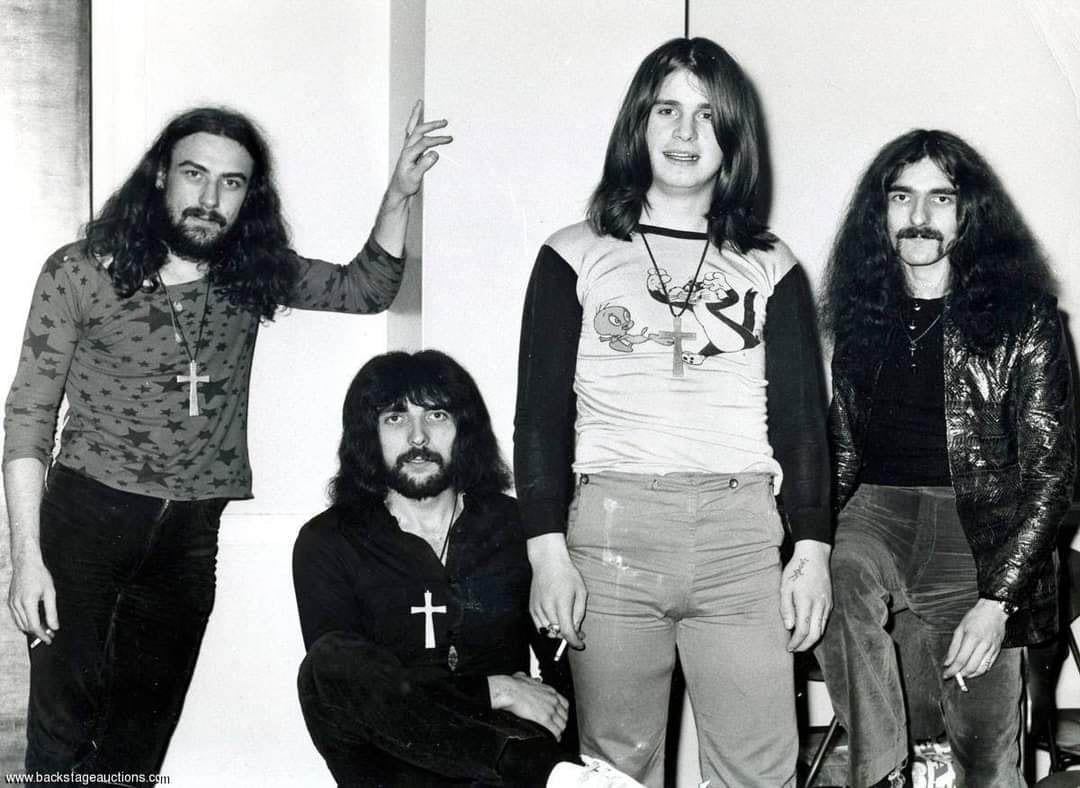
When learning that formative doom metal acts include Black Sabbath, Pentagram, Witchfinder General, Pagan Altar, Saint Vitus, and Candlemass, the religious connotations in the names of each band really begin to mount up. Of course, it should come as little surprise that the concept of doom links so strongly to religious terror and the fear of total destruction, though within the genre we see bands on both sides of the Christian/Satanic line that otherwise metal seems decided on. Ever since Black Sabbath captured the feeling of the sinister coming to get you in their first masterpiece and took to wearing huge metal crucifixes (pictured below) as protection, the music has been used to express themes of religious doubt, conversion, and the perils of the afterlife. Seemingly, the doom style is the perfect accompaniment to feelings of despair, the uncanny, and lingering threat.
That said, the themes and atmosphere do not imperatively rely on such vocabulary. Doom should be savoured, and the slow place allows that to happen; every last lagging beat and lumbering riff can be absorbed, every ounce of feeling and emotion can be soaked up to lead to bigger and grander experiences than other metal strains. Still, if doom must be characterized, it is the slow, heavy, and serious child at the back of the class; not always clean, not always popular, but a faithful companion nonetheless. Even nowadays, among the many traditional revival bands like Witchcraft, Devil, Blood Ceremony, and Hour of 13, where a certain joy in the ‘70s sound can often be heard, the essence of doom remains in tense moments and existential thoughts voiced through the medium of distorted amps. Without further ado, prepare to be doomed!
History of doom
As with all journeys of musical evolution, the path for doom’s development has not been straight and certainly is no longer narrow. Whatever the case, the name Black Sabbath remains of prime importance at its beginning. The creep-fest of the band-titled song saw further development with songs like “Electric Funeral”, “Iron Man”, “After Forever”, and “Into the Void”, which by 1971 had more or less built the doom metal style, even if no recognizable genre existed. Significant steps taken with the albums Paranoid and Master of Reality included Tony Iommi’s slow, monolithic riffs, the down-tuning of the guitars to C#, the maintenance of threat and tension in the music, and the ever-present unearthly wail of Ozzy Osbourne. Although many of Sabbath’s songs from the period use higher pace and fun jam sessions to flesh out the crawling verses, the band aimed to create the kind of heaviness they had witnessed working in Birmingham’s steel factories and coupled that with heavy topics and the heaviest guitars then recorded. Despite good sales and positive responses from fans, the music press and wider world preferred to ignore the group, and it would be some years before the style saw further transformation.
Doubtless a host of imitators began to copy the Black Sabbath sound from the mid-’70s onwards, but one of the key groups that would later become a major player centres around Pentagram from Washington, D.C., as well as related outfits Bedemon, Macabre, and Death Row. The link between all of these is vocalist Bobby Liebling, who featured in the earliest incarnation in 1971, though Pentagram left behind just a few singles of recorded material from their initial period. It wasn’t until 2002 that the bluesy doom rock collection First Days Here (collecting material from 1972-6) would reveal just how close Pentagram came to being a serious doom player, while Bedemon’s Child of Darkness (recorded from 1973-4) proved a similar point in 2005. All the same, it smacks of revisionism to call Pentagram the main proponent of doom as the ‘70s wore on and Black Sabbath dropped their lumbering style for more progressive adventures, since break-ups were too frequent in the camp, recordings were too sparse and of poor quality, while the band’s debut album only surfaced in 1985, confusingly already issued in 1982 as Death Row’s demo.
Prior to Pentagram getting truly on the map, the bands that dabbled with doom metal mainly belonged to the NWOBHM, which Black Sabbath had influenced in any case. Both formed in the late ‘70s, Witchfinder General and Pagan Altar played heavy metal with enough of the booming doom sound to attract the attention of fans of the slow. Both brought new tropes to the dour party. Witchfinder General contributed the now-ubiquitous theme of witchcraft and a strong preference for religious imagery: the covers of both their early albums used a backdrop of English churches and graveyards, along with topless models, which the bandmembers mimicked stripping and slaughtering for debut Death Penalty (1982). Pagan Altar also debuted with their demo in 1982, yet the austere ritual of their live shows (including the notably realistic performance of their song “The Black Mass”) was not to be heard until 1998 when recorded material surfaced, eventually stirring a reformation. Though Witchfinder General and Pagan Altar failed to last for long after a few early seminal releases, the work they did on the Sabbath template clearly paved the way for a broader emergence of the doom style.
Regardless of the instability of the Pentagram circle, doom metal began to properly take root in the mid-1980s, and North America was its locale. Chronology at this juncture seems hazy, and matters less and less as we head on through succeeding waves of doom, but Saint Vitus, Trouble, The Obsessed, and the aforementioned Pentagram were active from the early ‘80s and released albums beginning from 1984, when the debuts of Saint Vitus and Trouble arrived a month apart. Each group possessed distinct features, the creeping psychedelia of Vitus marking them out from the twin guitar melodicism of Trouble, while The Obsessed maintained some of the hazy blues tones of their earliest influences, alongside a punk spirit. The latter band lingered the longest before a full-length arrived in 1990, yet the work done by The Obsessed and vocalist Scott “Wino” Weinrich planted the seed for the state of Maryland to become a traditional doom metal stronghold. Acts sprung up locally, including Revelation, Internal Void, Iron Man, Asylum (later Unorthodox), and Wretched, while the scene persists to this day with the well-known Maryland Doom Fest.
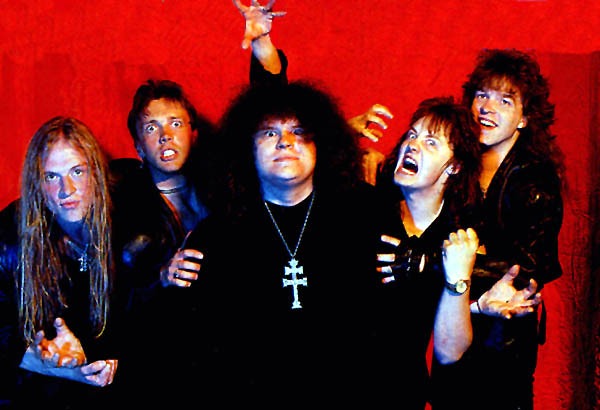
Though it would take some time to gain traction, the next major development in doom came from Sweden, through the group Candlemass (pictured below) and their self-explanatory Epicus Doomicus Metallicus debut in 1986. Pig Latin aside, the album title laid bare the band’s most significant innovation, that of upping the ante in an often pensive and taciturn style, and more grandiose musical structures and fantasy themes followed as a result. A string of classic albums throughout the tail of the ‘80s cemented their status as godfathers of epic doom, but also brought flair and escapism to the formerly working-class aesthetic of the genre, partly through a neoclassical infusion of complexity and pomp, partly through the prodigious vibrato of talismanic vocalist “Messiah” Marcolin and his on-stage garb of a priest’s habit. The importance of Candlemass’s creativity at a time of burgeoning skill in metal generally cannot be understated, as it formed one bridge away from the simplistic formula of early Black Sabbath.
Another such innovation inevitably surfaced with extreme metal’s proliferation. After thrash bands had succeeded in playing faster and faster, death metal aimed to sound heavier and nastier, so it was really a matter of time before doom joined hands with this new breed of extremity. Forebears of the style that would grow to be death doom appeared in the wake of the seminal Celtic Frost, not much caring whether their crepuscular riffing was fast or slow; among them, Dream Death began to seriously employ grim slower paces, then Autopsy, Asphyx, and Winter embraced doom feel in their deathly formulae. However, one may argue that these groups fall into the category of being “more death than doom”. Why this seems a tricky point is because the bands usually credited for spawning true death doom originated as death metal artists with a slower and more atmospheric sound, then later developed the doom angle to form a hybrid genre with its own distinct features.
Ever keen to forge a myth, hindsight has dubbed one such group of progenitors “The Peaceville Three”, targeting a trio from North England who all signed to Peaceville Records in the early ‘90s (amusingly, the label barely – if ever – housed all 3 at once). Paradise Lost, My Dying Bride, and Anathema all used the low-pitched harsh vocals ubiquitous to death metal, as well as the sonic clout and filth of its instrumental settings, but opted for eerie slower paces and emotional themes related to demise, romance, and religion, in addition to a sombre style of lead melody that set them apart even from countrymen Cathedral, who had displayed a monstrously heavy version of more traditional doom in 1991 with Forest of Equilibrium. Death doom caught on quickly in continental Europe as well, Swedes like Katatonia, Tiamat, Cemetary, and Draconian springing up, while the Dutch scene offered Celestial Season, The Gathering, and Officium Triste. The Finnish Amorphis are not to be forgotten either. Curiously, over the years many of the original death doom groups listed here have split up or shifted genre.
As the early death doom bands found their footing in styles between extreme and more accessible music, it became apparent that the blending of doom with other influences had created a wide array of novel sounds, which would eventually become sub-genres in their own right. Therefore, across the early and mid-’90s, most of the other styles related to doom took their first steps as extreme metal developed with shocking rapidity. Although gothic doom, funeral doom, stoner doom, and drone doom will here be counted among the proper offshoots of doom metal, sludge doom and black doom will not, seeing as these styles more often use elements from both genres rather than combining them into something new and significantly doomy. Granted, sludge metal almost certainly emerged with heavy reference to doom, though pioneers like Crowbar, Eyehategod, Acid Bath, and Melvins soon defined sludge as a separate movement.
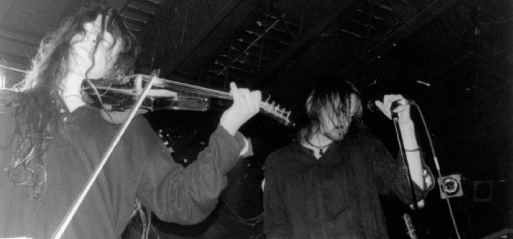
One of the notable features in the blossoming of death doom was its willingness to include classical instruments and vocal styles that had mostly been eschewed in the heavier-than-thou precincts of death metal and the working class mentality of much of traditional doom. Slowing the pace of death metal and introducing dirge-like riffing suited tragic themes better than morbid ones, which additionally suited mournful clean vocals and stately or even operatic female vocals – also rarities in the extreme climate. Early advocates of this change included My Dying Bride’s trademark violin (pictured below) and The Gathering’s keyboards and female singers, though many would later point to Paradise Lost’s Gothic as an extremely early indicator of where further stylistic separation would be made. Though rooted in death doom and taking cues from ‘80s gothic rock, Paradise Lost made use of symphonic interludes and a semi-operatic female guest, later lending a motif and a name to nascent gothic metal, and of course gothic doom.
The major proponents of gothic doom of this sort initially hailed from Norway, though it was not long before the rest of North-Western Europe joined Theatre Of Tragedy and The Third And The Mortal, as well as later Norwegian acts The Sins Of Thy Beloved and Octavia Sperati. This specific style quickly transformed into the now more established “beauty and the beast” gothic/symphonic metal scene, bands from which greatly outnumber those that retain true touches of doom riffing. On the other hand, the death doom bands that were simultaneously dropping their specific deathly features (harsh vocals, strongly distorted guitars, blastbeat passages) did not blend into the established trad or epic doom styles but developed their own brand of gothic doom that had more to do with melancholy melody and stylized, romantic darkness. Tiamat, My Dying Bride, Lake Of Tears, and Lacrimas Profundere would characterize the more “masculine” gothic doom, while Type O Negative simultaneously slid through the same territory without having much in common with the European acts.
Curiously, another Norwegian band with a female singer would provide a name for another mournful doom sub-genre: funeral doom. Though perhaps not entirely typical of the style and not the first among the seminal groups to get started (Thergothon’s 1991 demo appeared earliest), Funeral’s extreme slow pace and crushing bitterness sum up the key elements that Finns Skepticism and Thergothon brought to the development of doom. Death doom’s flirtations with tragedy and trips into higher pace were apparently not depressing enough for some, which led to even more despairing moods and sombre funereal atmosphere, unfortunately confirmed as authentic by the suicides of 2 Funeral members a few years later. Sorrow and death constantly appear in the work of Evoken, Mournful Congregation, and Shape Of Despair, some of funeral doom’s foremost proponents, while Esoteric’s debut Epistemological Despondency symbolizes the woe-stricken philosophical side of the genre.
Though the previously mentioned Cathedral first found fame for murderously slow and heavy doom, the English group eventually found acceptance among the budding stoner doom scene, where Sleep, Electric Wizard, and Acid King had found the laboured riffing and deep fuzz of doom was a perfect match for stoner rock’s hypnotic guitar workouts and drugged visions. In retrospect, Black Sabbath had been there and done that with “Sweet Leaf”, but these acts frequently took stoner doom into massive squalling distortion meltdowns and the driest, most doped-up vocal accompaniments they could dream up, embracing interstellar travel, dark rituals, and weird fantasy as their hallmarks, summed up well by Cathedral’s Carnival Bizarre album. These out-there parameters would be pushed even further by Yob, Om, and Bongripper, as well as seemingly endless weed-themed groups like Weedeater, Belzebong, Bongzilla, and Dopethrone, who by contrast aim to add little new to the crushingly heavy stoned Sabbath template.
Perhaps stoner rock and drone music share a kind of philosophical basis, as well as a frequent overlap in terms of narcotics, though the concept of gradual hypnotism is taken to extremes in drone doom. As suggested by the name, a reliance on ambient sounds and the long drone of feedback dominate some of the compositions, especially on the doom side of things, to the point where Sunn O))) – one of the most prominent drone doom outfits and key to its development – actually take their name from their preferred brand of amplifier. Few musical styles have a very certain pioneer, but in this case the importance of Earth’s early releases cannot be refuted, Earth 2 – Special Low Frequency Version in particular. Japanese band Boris were quick to refine the heavy drone formula, while Nadja, Bong, Orthodox, and Jesu all managed to differentiate the original idea into identifiable forms in the new millennium.
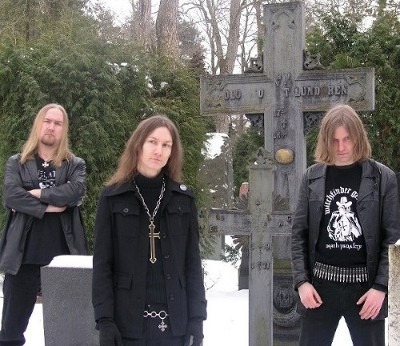
Thus, many of the major progressions in doom’s development came during the 20th century, while the period since then has produced several distinct national scenes as well as further blending between sub-genres. Aside from the well-established US doom stronghold around Maryland, which has its own particular flavour, stoner and death crosses also have large movements in North America, with a moderate number of revival acts pursuing the psychedelic style of the ‘70s, among them Blood Ceremony, Jex Thoth, Witch, and Orchid. Finland birthed a new wave of bands in the ‘00s, largely espousing a heavy and mournful version of traditional strain. Though Spiritus Mortis are undoubtedly the Finnish doom granddaddies, the careers of Minotauri, Fall Of The Idols, Cardinals Folly, Lord Vicar, and many more all followed in the wake of the idiosyncratic Reverend Bizarre (pictured below) and their classic debut. Besides these clusters, the majority of current doom outfits populate other areas of North-Western Europe, though with more and more bands turning up from South and East Europe, as well as South America. Even if it keeps foretelling the end, the future of doom looks bright!
Sub-genre playlists
Trad doom
Pinning down a traditional doom sound was never simple among the ‘80s acts who developed Black Sabbath’s style, but it has become even more difficult in the wake of the new trad sound, some of which emphasizes analogue equipment and ‘70s rock infatuations (psychedelia, folk, prog), while others pile on the power of modernity to truly rumble the earth with as much heaviness as possible. Factor in how trad doom may not always be slow (a feature shared only with epic doom), as in the case of genre staples like Trouble and The Obsessed who always vary pace, and an extremely broad sonic range can plausibly be called trad doom. However, in principle, all doom metal of this variety should possess a darkness of character, generally sluggish or lethargic pacing, and topics in some way designed to inspire dread, be they about religion, death, black magic, or real world issues. Certain trad doom groups will also downtune their guitars but still include some melodic component from guitar leads or possibly keyboard and organ in their music, while the vast majority favour clean vocals with a slightly sinister or unearthly quality.
Black Sabbath – “Electric Funeral” (Paranoid, 1970)
Pentagram – “Death Row” (Pentagram, 1985; recorded 1982)
Pagan Altar – “The Black Mass” (Volume 1, 1998; recorded 1982)
Trouble – “The Tempter” (Psalm 9, 1984)
Saint Vitus – “Born Too Late” (Born Too Late, 1986)
Internal Void – “Chasin’ the Dragon” (Voyage (demo), 1991)
Iron Man – “Harvest of Earth” (The Passage, 1994)
Reverend Bizarre – “In the Rectory” (In the Rectory of the Bizarre Reverend, 2002)
Blood Ceremony – “My Demon Brother” (Living with the Ancients, 2011)
The Obsessed – “Sodden Jackal” (Sacred, 2017)
Epic doom
Naturally, epic doom projects a larger image than most trad doom, yet that end can be achieved in many ways. The initial germ from Candlemass exhibited greater use of twin guitars, more flamboyance in terms of vocal and lead style, and a loftier feel that may result from steadier pace, layering of sound, and frequently existential topics. Other Scandinavian bands like Sorcerer, Isole, and Altar Of Oblivion have aided in characterizing this particular sound, while Americans Solitude Aeturnus are frequently credited with bringing a new lease of life to epic doom when they took to producing it in the early ‘90s in a more molten form that owes some of its scale to power metal. Most of the emerging epic doom bands, such as Crypt Sermon, Stygian Crown, and Smoulder retain the balance between grandiose slow riffing and startling up-tempo sections, not to mention prize vocalists who can elevate a song beyond merely hummable melody and into the stratosphere. Throughout its history, epic doom has always carried the potential to surprise with its strength and intensity.
Candlemass – “The Well of Souls” (Nightfall, 1987)
Sorcerer – “Dark Ages” (Sorcerer (demo), 1989)
Solitude Aeturnus – “Dream of Immortality” (Into the Depths of Sorrow, 1991)
Scald – “A Tumulus” (Will of the Gods Is Great Power, 1997)
Solstice – “Cimmerian Codex” (New Dark Age, 1998)
Altar Of Oblivion – “Where Darkness Is Light” (Grand Gesture of Defiance, 2012)
Procession – “To Reap Heavens Apart” (To Reap Heavens Apart, 2013)
Argus – “The Hands of Time Are Bleeding” (Beyond the Martyrs, 2013)
Doomocracy – “One with Pain” (Visions & Creatures of Imagination, 2017)
Crypt Sermon – “Key of Solomon” (The Ruins of Fading Light, 2019)
Death doom
In part due to being a collision of styles, death doom can describe a range of sounds usually murky and mournful in nature, yet with the potential to burst forth into boiling rage at any moment. The rumbling depths of downtuned guitars help to create threatening atmosphere, while vocals tend towards harsh growls interspersed with clean and operatic highlights at the more gothic end of the spectrum. Even in the case of the heaviest death doom artists, however, the potential for melody and variety exists, careful twin lead guitars characterizing the initial European influx of bands and acceptance of acoustic guitar and keyboard use remains wide. Owing to regional and historical differences, death doom varies widely in mood and theme, from otherworldly grimness in some of the more death metal inspired strains, such as Hooded Menace and Disembowelment, to medieval obscurity from early Paradise Lost and The Ruins Of Beverast to romantic anguish in the case of My Dying Bride and Anathema. Positive emotions, on the other hand, are not widespread.
Winter – “Goden” (Into Darkness, 1990)
Paradise Lost – “Dead Emotion” (Gothic, 1991)
My Dying Bride – “The Return of the Beautiful” (As the Flower Withers, 1992)
Disembowelment – “Your Prophetic Throne of Ivory” (Transcendence into the Peripheral, 1993)
Katatonia – “In Silence Enshrined” (Dance of December Souls, 1993)
Novembers Doom – “Aura Blue” (The Knowing, 2000)
My Silent Wake – “Tunnels” (A Garland of Tears, 2008)
Hooded Menace – “Rituals of Mortal Creation” (Never Cross the Dead, 2010)
Assumption – “The Non-Existing” (The Three Appearances, 2014)
Triglathena – “Laudanum of Bereavement” (The Vile Silence, 2020)
Gothic doom
Perhaps the most maligned of all doom sub-genres, gothic doom is often subject to the misconception that any neo-Baudelairean or faux-Victorian rock music with classical or contemporary female vocals and harsh male vocals should be described as gothic. While it can occasionally be said of Leaves’ Eyes, Nightwish, or Tristania that their aesthetic contains elements of the gothic, only the latter really could claim to play in a gothic or gothic doom style, and even then just on a couple of albums. However, these connections (for instance, between Leaves’ Eyes original singer Liv Kristine and Theatre Of Tragedy, who she also fronted) run deep throughout the “beauty and the beast” acts, so separating symphonic groups and doomier gothic ones with some classical elements remains a minefield. Nevertheless, among both the “feminine gothic” and “masculine gothic” types, common features include high drama, romantic or religious despair, and a formal gravity to proceedings, sometimes emphasized by doom’s slowness and always by its frowning mood. In some instances, the central importance of traditional rock instruments can lead to heavy metal guitar solos and powerful drumming, such as with Paradise Lost’s mid-’90s material, while other bands may downplay the role of riffing and keep doomy pace while adding classical flair.
Type O Negative – “Christian Woman” (Bloody Kisses, 1993)
Paradise Lost – “True Belief” (Icon, 1993)
Tiamat – “Whatever That Hurts” (Wildhoney, 1994)
The Third And The Mortal – “Death-Hymn” (Tears Laid in Earth, 1994)
Lake Of Tears – “Sweetwater” (Headstones, 1995)
Theatre Of Tragedy – “And When He Falleth” (Velvet Darkness They Fear, 1996)
Virgin Black – “And the Kiss of God’s Mouth, part 1” (Elegant…and Dying, 2003)
Sabachthani – “Christabel’s Journey” (Miserable Endings, 2007)
My Dying Bride – “Feel the Misery” (Feel the Misery, 2015)
Draconian – “Sorrow of Sophia” (Under a Godless Veil, 2020)
Funeral doom
Think of traditional doom, death doom, and gothic doom as depressing genres if you like, but funeral doom surely takes the crown of most soul-crushing in despair and hopelessness. With a strict requirement to be torturously slow, the massive effort each note is imbued with ensures that one cannot miss the extreme emotions, while struggling low-pitched vocals and psychologically bleak ambience remains the norm despite a broadening of the initial grimy sound. Funeral doom strongholds still exist in Finland and Scandinavia, though a growing French scene, including bands like Ataraxie, Slow, Monolithe, Remembrance, and Funeralium, has made waves in the last decade or two. Extreme exponents of the style such as Wormphlegm (rumoured to self-harm to achieve truly tortured vocals) reach out towards black and death metal atmosphere, though more melodic acts exist too, originators Skepticism incorporating a wide array of keyboard sounds, while the plodding and often extremely long compositions provide scope for epic stories, as with Ahab’s concepts of seafaring and Moby Dick. Nevertheless, the slow tread of the funeral march remains the most constant association.
Thergothon – “Elemental” (Stream from the Heavens, 1994)
Funeral – “When Nightfall Clasps” (Tragedies, 1995)
Skepticism – “Sign of a Storm” (Stormcrowfleet, 1995)
Esoteric – “Sinistrous” (The Pernicious Enigma, 1997)
Wormphlegm – “In an Excruciating Way Infested by Vermin…” (In an Excruciating Way Infested by Vermin…(demo), 2001)
Monolithe – “Monolithe I” (Monolithe I, 2003)
Mournful Congregation – “The Monad of Creation” (The Monad of Creation, 2005)
Evoken – “In Solitary Ruin” (Antithesis of Light, 2005)
Aeonian Sorrow – “Forever Misery” (Into the Eternity a Moment We Are, 2018)
Shattered Hope – “Towards the Land of Deception” (Vespers, 2021)
Stoner doom
Probably more than stoner rock itself, stoner doom fixates around the feel produced by billowing clouds of dope smoke. Foremost, the deep fuzzy sonicboom of doom metal matches the muggy soporific effects of the drug, while it surely helps those red-eyed musicians playing the songs that the genre can remain relaxed while achieving huge heaviness. Sleep’s Holy Mountain set out an early template that added significant weight to what Kyuss were doing in more rocky style, while heavier exponents arrived not long after as Electric Wizard painted a darker template that combined the occult with drugs and brutally simple but enormous riffing. Key to the definition of stoner doom, slowness and repetition are writ large on most songs, with hugely expansive runtimes and concepts from the likes of Yob, Ufomammut, and Elder, while similarly-themed but more song-based exploits come from High On Fire, one of Sleep’s splinter groups along with Om. Jamming is prized less than in regular stoner rock or metal, instead substituted for weird soundscapes that may still involve extended guitar leads and copious distortion. A huge majority of stoner doom comes from the USA, while Europe has also begun to develop more notable names of late.
Sleep – “Inside the Sun” (Sleep’s Holy Mountain, 1992)
Cathedral – “Fangalactic Supergoria” (The Carnival Bizarre, 1995)
Electric Wizard – “Return Trip” (Come My Fanatics…, 1997)
Acid King – “Silent Circle” (Busse Woods, 1999)
Church Of Misery – “Megalomania (Herbert Mullin)” (Master of Brutality, 2001)
High On Fire – “The Yeti” (Surrounded by Thieves, 2002)
Om – “On the Mountain at Dawn” (Variations on a Theme, 2005)
Yob – “Breathing from the Shallows” (The Great Cessation, 2009)
Haunted – “Orphic” (Dayburner, 2018)
Mammoth Weed Wizard Bastard – “The Majestic Clockwork” (Yn Ol I Annwn, 2019)
Drone doom
Surely the most divisive of doom sub-genres, drone doom exists in the area where music starts becoming just “sound”. Generally the difference between drone doom and the even less musical ambient drone comes down to the presence of riffs, though the specificity of some of the note sequences can be questionable given the glacial sloth with which many drone doom bands perform. Earth’s flirtation with a very simple, lo-fi version of doom in the early ‘90s quickly yielded to an interest in other kinds of atmospheric music, which also exemplifies several other key players, alongside frequently spiritual, natural, and psychedelic themes despite a general aversion to using lyrics. Drone doom pieces may also drag out to incredible lengths owing to the gradual introduction of different elements or heavy repetition of a single sound. Orthodox and Moss both epitomize the way simplicity can be used in drone doom, though in pleasant and ugly ways respectively, while layering and detail in the work of Jesu, Nadja, and Sunn O))) demonstrates how full of a sound this style can produce. A hefty dose of these outfits call America home, perhaps due to the dominance of Southern Lord Recordings in the field of atmospheric and ambient metal.
Earth – “Like Gold and Faceted” (Earth 2 – Special Low Frequency Version, 1993)
Boris – “Absolutego” (Absolutego, 1996)
Sunn O))) – “NN O)))” (ØØ Void, 2000)
Khanate – “Under Rotting Sky” (Khanate, 2001)
Nadja – “Slow Loss” (Skin Turns to Glass, 2003)
Jesu – “Heart Ache” (Heart Ache, 2004)
Orthodox – “Geryon’s Throne” (Gran Poder, 2006)
Moss – “Subterraen” (Sub Templum, 2008)
Black Boned Angel – “Part III” (The End, 2013)
Bong – “Polaris” (Stoner Rock, 2014)
