
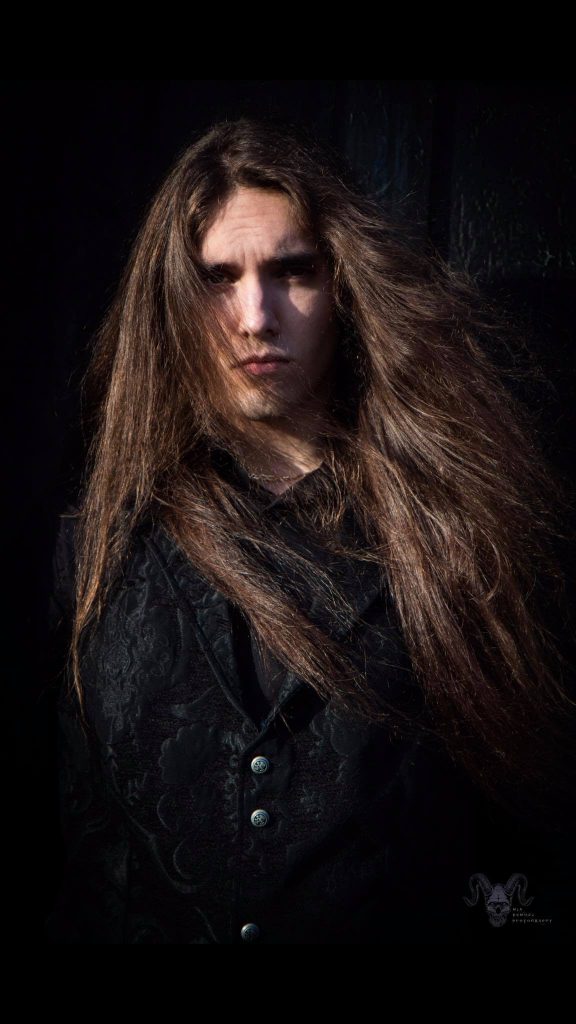
Chris Dovas, drummer for the up-and-coming symphonic theatrical metal sensation Seven Spires recently unveiled his solo project Dovas. He was kind enough to take the time and talk to me about this project as well as his work in Seven Spires and a lot of other cool stuff. Read the full interview below.
TMO: Hello! How are you doing given the current situation?
Chris: Pretty good! As good as I can be. I’m doing a lot of online teaching, Skype lessons. I’ve been doing some session work for people, recording tracks out of my house and sending them off. And I’ve just been working on new Seven Spires stuff. It’s all we can do right now. Adrienne and Jack are hard at work with that and Pete and I are working on what they’re giving us. Other than that, I’m also writing for the next Dovas album. Also a lot of sales have been coming in for the first Dovas record which has been really good too. I’m gonna have to actually re-stock on merch pretty soon.
TMO: So about Dovas, once the situation is over, are you planning on playing music from that album live?
Chris: I totally am. I already have the whole live line-up ready. Pete is playing with me. I’ll be playing guitar and singing so the hardest part for me was finding a drummer that could actually pull off the tempos on the record but I found a really good drummer. I haven’t released the live line-up yet. I’ll wait until we start seeing a hint on when we’re gonna be playing. It should be fun and I hope to tour a lot with it.
TMO: I actually noticed that the bass stood out quite a lot on the record. It gave this combination between the sound on the record being classic death metal but I guess with the production being a bit more crisp. And the bass parts actually took me towards the technical death metal area, like Beyond Creation, Obscura. It has that fluidity to it. So was that blend between classic and modern intended or did it just come about?
Chris: It kind of just came about. That’s why I wanted Pete on the album, because he has that technical death metal background. We used to play in a technical death metal band together called Unflesh. So I knew he had this background with influences like Obscura and Revocation, and I knew he would’ve brought that technical aspect to the record. The guitar riffs are brutal and pretty straightforward and I knew he would add a lot of different melody, harmony and counterpoint. Like not just playing exactly what the guitar is playing, but playing off of what he’s hearing, doing his own bass runs and fills and all that cool stuff. So it wasn’t planned but it was kind of what I expected.
TMO: The mixing is also great. I think it has the balance of technical hi-fi and raw very well put out.
Chris: Jack Kosto, my bandmate and guitarist in Seven Spires did a great job at mixing and mastering the record as well as producing and engineering. I feel the whole mix is really good and I’m always very impressed with his knowledge of mixing and mastering. It definitely has a raw feel as well. I really wanted it to have an apocalyptic sound. Because the record is basically about the apocalypse. It stems a lot from The Book of Revelations, that’s where my influence was with this, from the Bible. If you’re familiar with the story, it states Satan tried to become God and overthrow him. Satan failed at this. So I wrote a story of what would’ve happened if he completed his task of becoming the new God. I always found horror movies and music that was about Satan and demons to be the most brutal so I wanted to make a scary, horror record having a lot of influence from The Book of Revelations. A lot of characters from that, like the 4 horsemen of the apocalypse: war famine, pestilence and death, they all make an appearance in the title track, when the world turns into the Everlasting Lake of Fire. It’s all inspired from the Bible but I wrote my own version of it like “What would’ve happened” if Satan completed his mission to become God. Part 2 will have an unexpected twist.
TMO: Is it going to be like a follow-up?
Chris: Yeah. It’s gonna be a continuation. It will take place years and years down the road. I’m not gonna reveal the concept yet but it’s gonna have an unexpected twist and I think people will like it. In fact, I think all the Dovas records are going to be in this universe.
TMO: Now I want to back down a little bit because I wanted to ask you why did you actually decide to create a side project?
Chris: I wanted to have that experience of writing and releasing music that I wrote. Also it’s cool to get the final say on everything. For example, what is played on the album, what musicians to get, what merch to have, future plans and so on. It’s also really cool to tell a story that I wrote 100% I also grew up listening to a lot of old school Death Metal and Thrash Metal and evening Black Metal so it was cool to have a record in this kind of Genre. And finally, as I stated before I always found stories involving Satan and his demons to be the most brutal and the most scary so it’s cool to have a project that has this concept.
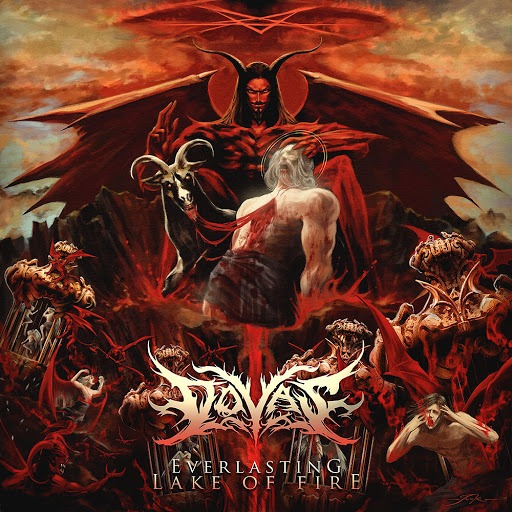
Listen to Everlasting Lake of Fire on Spotify
TMO: So you played everything except bass on the record. I didn’t know you play anything else except drums and it was quite a big surprise for me. So how many instruments do you play and what are people’s reactions to finding out you’re basically a one-man band?
Chris: I play guitar, drums and I don’t call myself a singer but I can do the screaming. That’s it. I learned a lot of music theory on piano while studying a Berklee so I can fool around on piano but I wouldn’t call myself a piano player. So yeah just guitar, screaming and drums but I consider myself to be a drummer. And as far as I’ve seen there have been only positive reactions so far. For the most part it’s been a great response. I don’t really know what are people’s reactions to me playing everything but so far the whole record itself has been getting a very positive response.
TMO: So now that you mentioned Berklee. First off, congratulations on your graduation! If I know this correctly you have a music performance degree. So what exactly does that mean?
Chris: I’m a music major and then I majored in performance. So my major is basically just getting as good at my instrument as I can. We have a lot of private lessons, a lot of labs like a double bass lab or a fusion styled-lab etc. We have a session work class where you’re going in the studio and you’re playing and recording in the studio. And the final exam was a senior recital which is basically performing a one-hour set. So, it’s just playing and practicing and practicing and playing and you get the point.
TMO: So is there any separation between what you do in the metal world compared to the academic side of things? Like how much of what you learned at Berklee is something you actually used in your metal projects?
Chris: I would say I used that more in the Dovas project because Berklee is where I learned music theory, harmony, counterpoint and how chords work and I use that when writing music. Because I’m a drummer and drums don’t have harmonic pitches. That’s part of the reason why I could learn guitar and play it. I wouldn’t have been able to write the record if it wasn’t for my training at Berklee as far as just knowledge of music and notes work with each other. And I’m sure there’s some stuff I used in Spires as well for drums because I had a lot of fantastic drum teachers at Berklee.
TMO: So let’s get into Seven Spires. How did you join the band because as far as I know they were already active when you came in the picture.
Chris: Yeah, I met a guitar player. His name’s Nick Petrino. He plays for Dee Snider now. I needed a guitar player for a gig. I was like 13 or 14 years old at the time and actually my dad was calling all these music stores to find a guitar player to fill in for a show I had coming because something had happened with the guitar player, and he found Nick. Anyway, Nick comes and jams with me and we played that show. Then I needed to do something for Berklee for the summer program and I needed to record a video of me playing to get accepted into that program. And I was gonna do a Dream Theater song and I was like “Nick, can you help me with this but I also need a singer.” And he knew Adrienne and she was nice enough to help out. So she helped me with that Dream Theater cover. Spires was already a thing at the time but they had just the E.P. released. And like literally a month later the Seven Spires drummer quit. I saw that on Facebook and they had a show in Manchester, New Hampshire which is where I live. Somehow, they were able to pull off the show. I went to that show and I was like, “Adrienne, let me audition.” She agreed. I came in the audition having all the songs learned. I spent hours on them. I wanted them to feel like they could’ve played a show that night during the audition. Then I filled in for a couple of shows and then they kept me. Five years later here we are and I’m still the only drummer who recorded on a record so we all consider myself the original drummer for the band.
TMO: So as far as I know when Solveig was released you were always in the band, but the album was released with sampled drums. Why was that?
Chris: So when I joined the band, they were already done recording. I think it was in 2015. I had only played one show at the time with them and they were getting ready to send it off so it was like “This one’s done.” But then it took us a long time to get it out because of delays and a lot of stuff production-wise. I forget exactly why. I think mixing and mastering took like a year or two. So by the time the record came out I had already been in the band for a few years. Maybe it would be cool to re-do the drums on the record and do a re-release at some point.
TMO: Yeah maybe you could do like an anniversary thing at some point. Now here’s something I’m curious about. Basically, the drums are sampled on the recording but you show up in the videos for “The Paradox” and “The Cabaret of Dreams”. Don’t you feel like that’s misrepresenting you a little?
Chris: Yeah, at first, I think when they said they were doing the videos I did not want to participate and I didn’t want to be in the booklet either because I hadn’t actually played on the album. There was no conflict or anything but it just didn’t feel right to me. But then I thought more about it and I thought that it was a little bit of a selfish approach to do that because the videos would’ve looked really odd without a drummer. So I did it and then I also showed up in the booklet because it would look weird with just 3 people. But if you look in the booklet you see Chris Dovas – live drummer. In the end, I wanted to be a team player so that’s why I showed up in the videos and the booklet because that gives the band the image. It might misrepresent me a little because you’re seeing me in the video and I didn’t play on those songs, but bands are about being a team and I took that sacrifice for what I consider my family members. It also left room for improvement for “Emerald Seas”. I absolutely love “Solveig” and the songs on them!
TMO: Now you’ve been in the band for years now but with “Emerald Seas” it was the first time you went in the studio to actually record Spires music. So how was that experience?
Chris: Fantastic! Jack and I worked on sessions before. We work very well in the studio together. There were a couple of times when we’d disagree but then we’d meet in the middle and that turned out to be the better option. I remember we really disagreed about the groove in the middle section in Succumb and eventually it was the same thing. We just met in the middle and again, it was the better option. It was funny with some things, like mistakes that we kept. For example, the hits at the end of “Bury You” weren’t planned. It was just supposed to keep the groove going all the way to the end but I messed up and did hits and it actually sounded better so we kept that. Overall, it was just a great experience. It was probably one of my favourite sessions I’ve done in my life, really fun, good vibes and I’m also really happy with the final outcome. I can’t wait to improve and do even better next time.
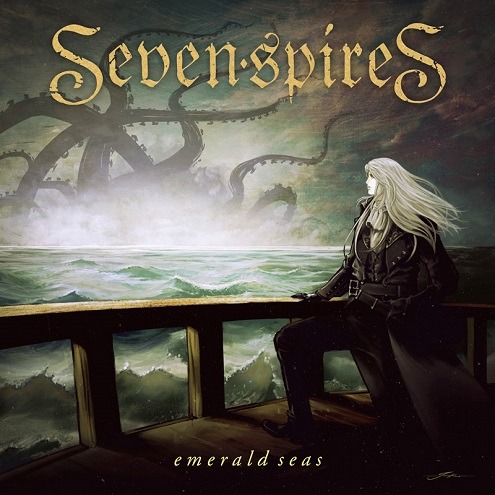
Listen to Emerald Seas on Spotify
TMO: So would you say you have a favourite song to either listen to or play from “Emerald Seas” and if so, which one would it be?
Chris: My favourite song to play is probably “Succumb” because it’s not too fast and it’s not too slow but it has a lot of fast chops in there as well. It’s just such a comfortable song for me to play. I was thinking about “Every Crest” as well. That’s a fun one too. But there’s something about Succumb even when we played it live. The energy we had when we played that one was great. That would probably be my favourite to play. Listening-wise, I don’t know because the record is intended to be listened front to back because it’s a concept and a big story. But I think one of my favourite moments is probably Fearless, when Jack and Pete have a solo at the same time. It’s really an intense moment and I also think it showcases all the knowledge that we have of our instruments. It really has a “wow factor” to it.
TMO: So I know Adrienne and Jack are mainly responsible with the lyrics and music but from what I know you all play a role in creating the record. So what exactly is your part composition-wise?
Chris: What happens is that Adrienne and Jack will send over demos and then Pete and I will get together and work on our parts because they only give us outlines. So we will work on rhythm stuff to bring the songs to life more. Then Adrienne and Jack will fly to my place or we’ll go to Boston and we’ll all rehearse as a band together. Then they go back and work on things and send us another round of demos to work on and we just keep that cycle until we feel the songs are done. I also make it a point to ask Adrienne what the songs are about emotionally because I want to get that energy right. For example, I know that Fearless is about coming to terms with death. I think about these things when I’m playing and I will always write my parts also based on the concept of the song.
TMO: Now I want to ask you some drum-related questions. What’s your opinion on playing a triggered bass drum versus an organic one for live performances and for studio?
Chris: My take on it is, if I were playing punk music or rock’n’roll, country or even some heavy metal stuff, I would use and acoustic kick. But with a lot of the death metal stuff and even a lot of the Spires stuff there are a lot of cool intricate patterns going on with double bass. Like, Drowner of Worlds will hit over 240 bpm when you’re blasting. And all the trigger is doing is making sure that the kick doesn’t get muddy and sounding like a big blob of noise but keeps it clear and crisp. It’s actually harder to play with a trigger because you can really hear it when someone makes a mistake or starts to flub. So, my favourite sound is an acoustic kick blended with a triggered kick. You have the acoustic kick that will give you that sound of the actual drum itself and the trigger will give the definition for all the fast patterns and changing note rates on the pedals. Because if I’m working my ass off, I like people to hear what I’m doing. And we’re not headliners yet. So I only use triggers now with Spires live because we don’t have the time and luxury to do a nice long soundcheck. And with triggers I have the ability to use the same sample that was on the Seven Spires record if I really wanted to. And I have dynamics for it. Like if I hit soft it’s gonna sound soft and if I hit loud it’s gonna sound loud. But I know the trigger wil sound great every time regardless of the venue or sound guy. And a good kick sound and snare sound is half the drum sound in metal. But for studio, my ideal sound is a blend of acoustic and triggered kick.
TMO: What are your favourite practice exercises?
Chris: I practice a lot of double bass exercises and a lot of hand exercises. I practice both endurance, like slower tempos for longer periods of time, and then I also practice speed. Like boosting the metronome to 280 bpm and practice doing like 2 bars of 8th notes and 4 bars of 16th notes and keep swapping. I’ll just try different bass drum patterns. I try to challenge myself, finding stuff I can’t do and then try and learn them. I’ve been playing rock and metal the longest, like since I was 6 years old. So I just try to stay up to the times of what people are doing and keep improving but I’ll also practice jazz and fusion and funk stuff. Recently I’ve been trying to work on my reggae and latin music chops because those are the genres I’m least familiar with playing so I’ve been digging into that.
TMO: When you write songs, do you start with the drums or do you lead with the guitar or melody?
Chris: So, for the Dovas record I’ve always started with the guitar. I pull out my laptop and my interface and get my guitar plugged in and I’ll just have ideas that have been singing in my head all day, or I’ll jam around, or maybe I’m listening to a song and I’ll think that I want to make something that sounds similar or inspired from it. Basically, it’s always the guitar that I start with and I get the structure down. And when I’m done writing the song, I’ll plug it into my headphones and play along with the drums and then I feel what it’s like to play the drums over it, which gives me ideas about how to change the guitar. So I kinda go back and forth between those.
TMO: As far as I know, you play Vater drumsticks and Remo heads but what do you prefer for drum shells and cymbals.
Chris: For cymbals, my preference is Zildjian. I used to experiment a lot with Meinl and I love Meinl as well but I really prefer Zildjian. For shells, I have a Yamaha recording custom and I love Yamaha but I’m not limited to that. I also love Pearl drums and DW as well. These are the ones I have valid opinions of cos I played a lot on them. I also know Tama is really cool but I don’t really know many kits by them so I don’t really have a valid opinion. There are other kits that sound great for sure but Yamaha, Pearl and DW are my favourites. The only exception is for the snare drum, I use the Ludwig Black Beauty. In my opinion it’s a phenomenal snare drum. I used it on the Dovas record and on the Seven Spires record and it’s also what I used on the Unflesh record. And every time I do session work for people, I use that, and I also used it for all my sessions at Berklee.
TMO: Well thank you very much for taking the time to do this interview. Do you have anything to say to your fans or Seven Spires fans to wrap this up?
Chris: Thank you very much for supporting me and my projects, it really means the world to me. If you haven’t heard the Dovas record you can go to chrisdovas.com/shop to get the record or you can get it on iTunes or Spotify or even check it out on YouTube. For Seven Spires, if you want to support us you can buy our merch and CDs at sevenspiresband.com. If you haven’t heard our music, please check it out and I hope you enjoy it. Also, if you want to follow us on Instagram and Facebook, I really appreciate it. So yeah, thank you all very much for your support! \m/
Follow Chris on Instagram and Facebook.
Everlasting Lake of Fire is out now!
